Chimes in the County of Durham
Most of the bell data on this page is taken from George Dawson’s National Bell Register – to whom my thanks are extended.
A list of Church of England churches, with basic details, in the county that have one or two bells may be found here
Beamish, St Andrew, Stanley 10+1: 16-2-3 in F
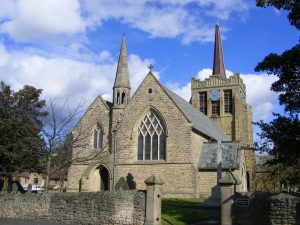 Though this is the parish church of Beamish, the area has been absorbed into the 19th century part of Stanley. The church was built 1876-7. It was designed by J G Holt of Manchester.
Between 1909 and 1931 C. H. Fowler and his successor, W. H Wood. built the vicarage and extended the church, enlarging the chancel. The tower and bells were added 1931. They are a diatonic chime of 10 with an additional 4b bell.
It is built from rock faced stone with ashlar dressings and slate roofs with ashlar coped gables. Original chancel, nave, north aisle and south porch with tower added over chancel with organ chamber and vestry added either side. Chamfered plinth and continuous sill band. West front has large 4-light pointed arch window to nave with lattice tracery and small roundel above. West end of north aisle has slightly set back narrower gable to left with between an octagonal bellcote which projects with open octagonal arcaded lantern topped with octagonal stone spire. The tower has a spire of concrete. There is a Sanctus bell, 2cwt and 20″ in diameter, which was cast in 1876 by William Blews and Sons of Birmingham.
The Bells
A complete chime of 11 bells by Gillett & Johnston, 1930. They are a diatonic chime of 10 with a flat 4th bell. They are chimed from a baton clavier.
1 1-2-0 19.75″ 1930 Gillett & Johnston 1740.0Hz A-20c
2 2-1-16 22.25″ 1930 Gillett & Johnston 1548.0Hz G-22c
3 3-0-3 23.38″ 1930 Gillett & Johnston 1380.0Hz F-21c
4 3-1-1 25.75″ 1930 Gillett & Johnston 1304.0Hz E-19c
4b 3-3-25 27.38″ 1930 Gillett & Johnston 1228.0Hz Eb-23c
5 4-3-8 29.00″ 1930 Gillett & Johnston 1160.0Hz D-22c
6 5-2-21 31.38″ 1930 Gillett & Johnston 1034.0Hz C-21c
7 7-1-3 34.38″ 1930 Gillett & Johnston 920.0Hz Bb-23c
8 9-0-24 36.75″ 1930 Gillett & Johnston 870.0Hz A-20c
9 12-1-26 40.75″ 1930 Gillett & Johnston 774.0Hz G-22c
10 16-2-3 42.25″ 1930 Gillett & Johnston 690.0Hz F-21c
All the bells have Gillett & Johnston 1930 cast around the top of the bell and in addition the tenor has
TO THE GLORY OF GOD AND IN MEMORY OF CUTHBERT GREEN
SECOND LIEUTENTANT 2ND BATTALION DURHAM LIGHT INFANTRY
REPORTED MISSING ON THE SOMME 15TH OCTOBER 1916
A DEAR FRIEND TO WILLIAM OXLEY FORSTER
Bishopton, St Peter 3: 2-3-1
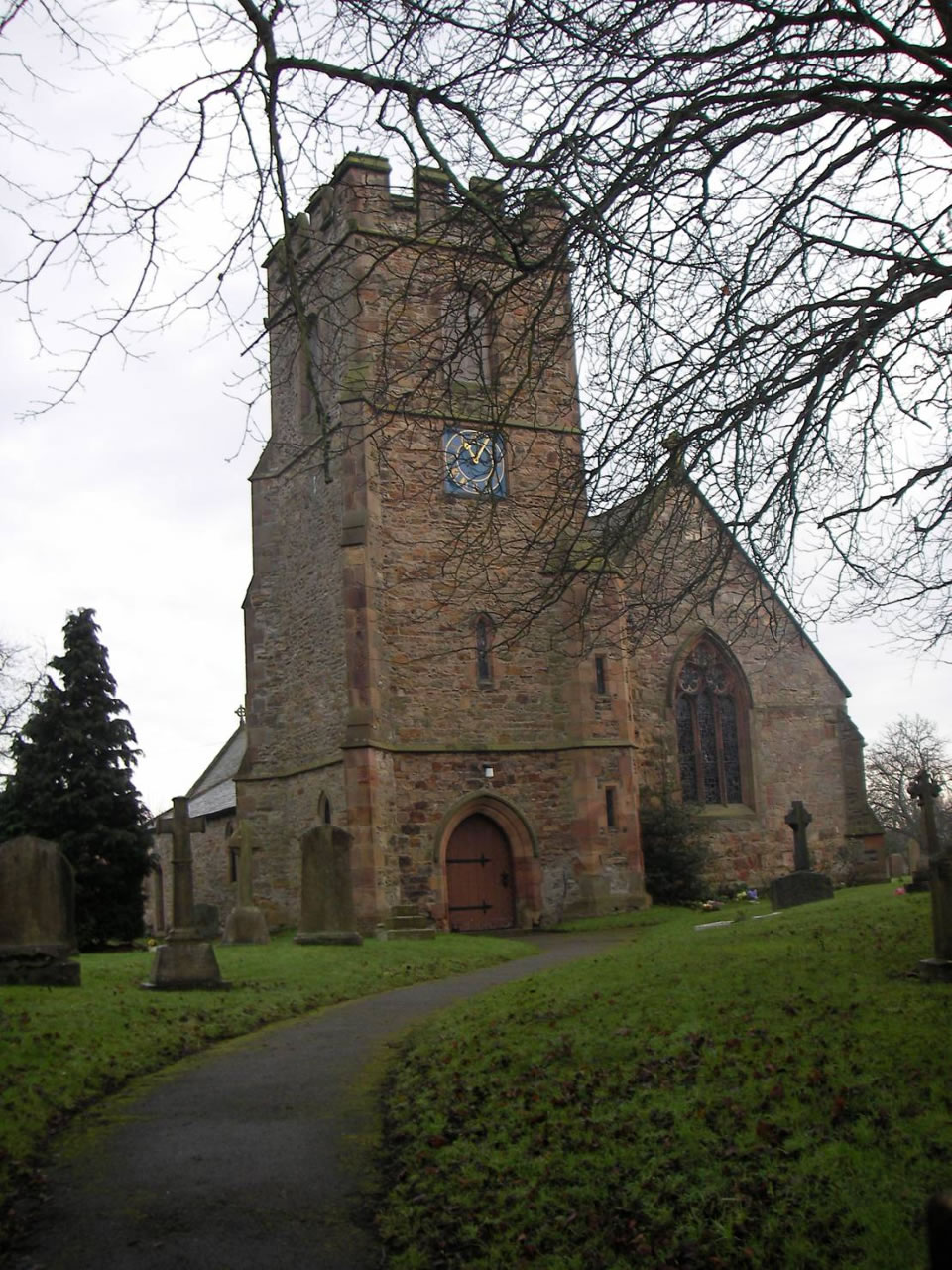 The church dates probably from the 13th century. In 1846–47 it was largely rebuilt by the Lancaster architects Sharpe and Paley, who also added the north aisle and the tower.
It is constructed in sandstone, with some limestone in the chancel, and has green slate roofs. Its plan consists of a three-bay nave with a north aisle and a tower at its west end, and a two-bay chancel with an organ chamber to its north.
The tower is in three stages and has a west door, diagonal buttresses, and a polygonal stair turret at the southwest corner. On its west side is a clock face, and the top stage contains two-light bell openings. The tower is surmounted by a battlemented parapet. A fragment from a medieval grave-slab and a niche are incorporated in the west front of the tower.
The west end of the church has a three-light window, and at the east end are three stepped lancet windows. The south wall of the church contains another medieval grave-slab, and a diamond-shaped sundial dated 1776. The interior of the church is plain and plastered. The font dates from the 13th century. The reredos is dated 1889 and is constructed from Caen stone and marble.
The Bells
“The Bell Frames are probably contemporary with the tower; they have three parallel pits,
and are of long-headed type with two queen-posts and end-posts to each truss, but no bracing. One of the three Bells has an inscription dating it to 1847, the other two are uninscribed.” (Peter Ryder, January 2001)
“Bishopton, St Peter – Rehung with modern fittings for swing chiming , retaining canons, but indications were that they had previously been hung for ringing. Ringing chamber formerly had a balcony on the nave, but this had been boarded off. The tower is on the north side of the nave so the gallery was sideways on to it.” (Peter Rivet 1975)
They have been described as a ring of three and therefore these may be a lost ring, as suggested.
1 1-2-4 20.00″ 1847 C & G Mears
2 2-0-4 21.13″ 1847 C & G Mears
3 2-3-1 23.88″ 1847 C & G Mears

The bells
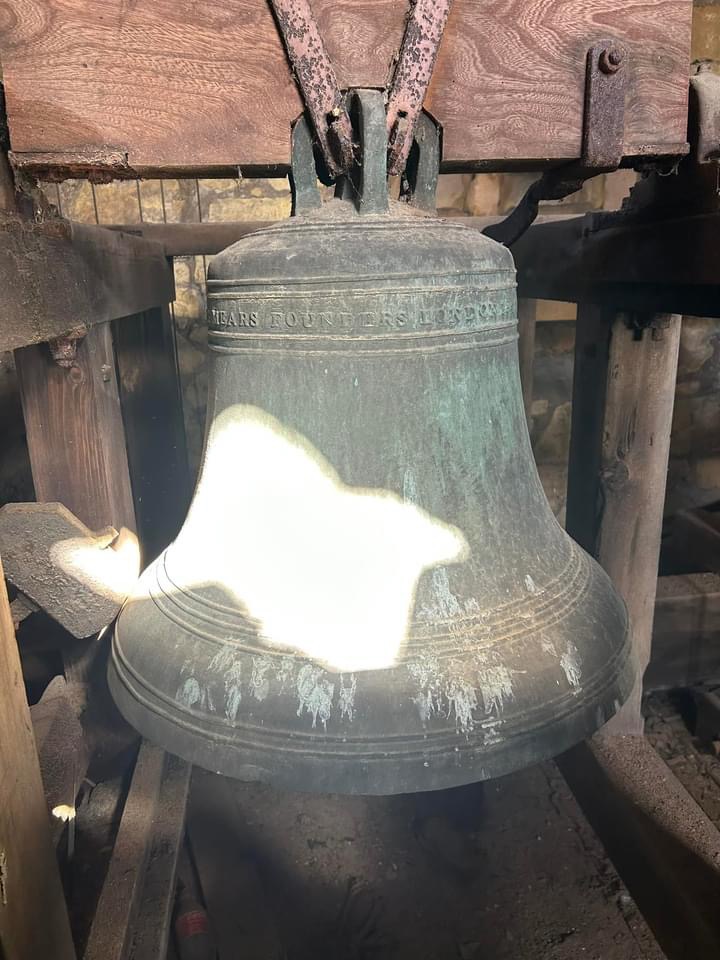
One of the bells
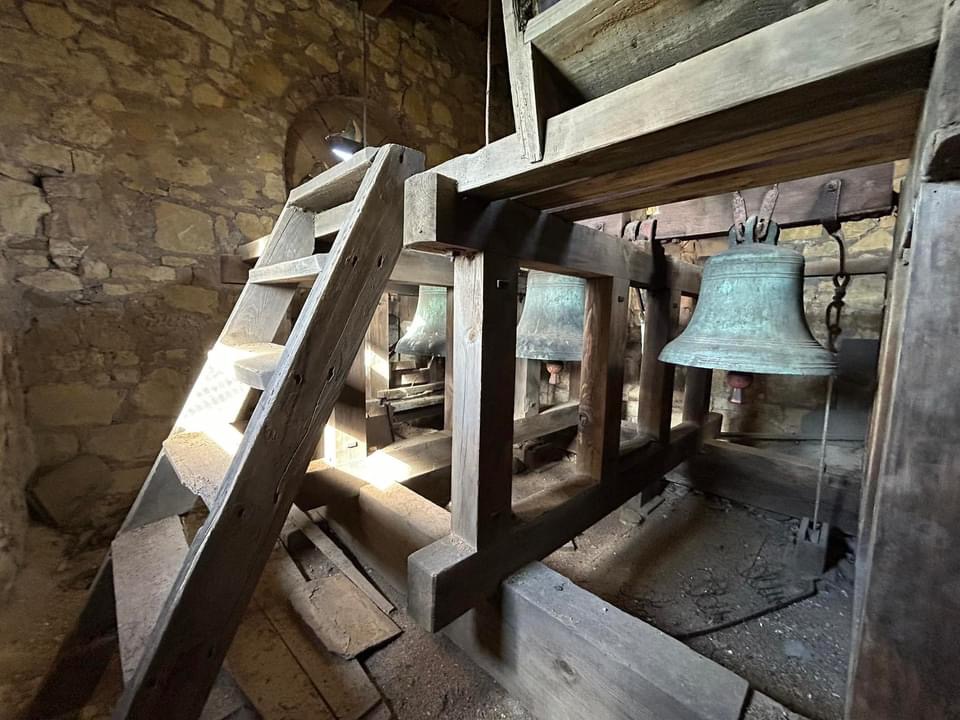
Another view of the bells
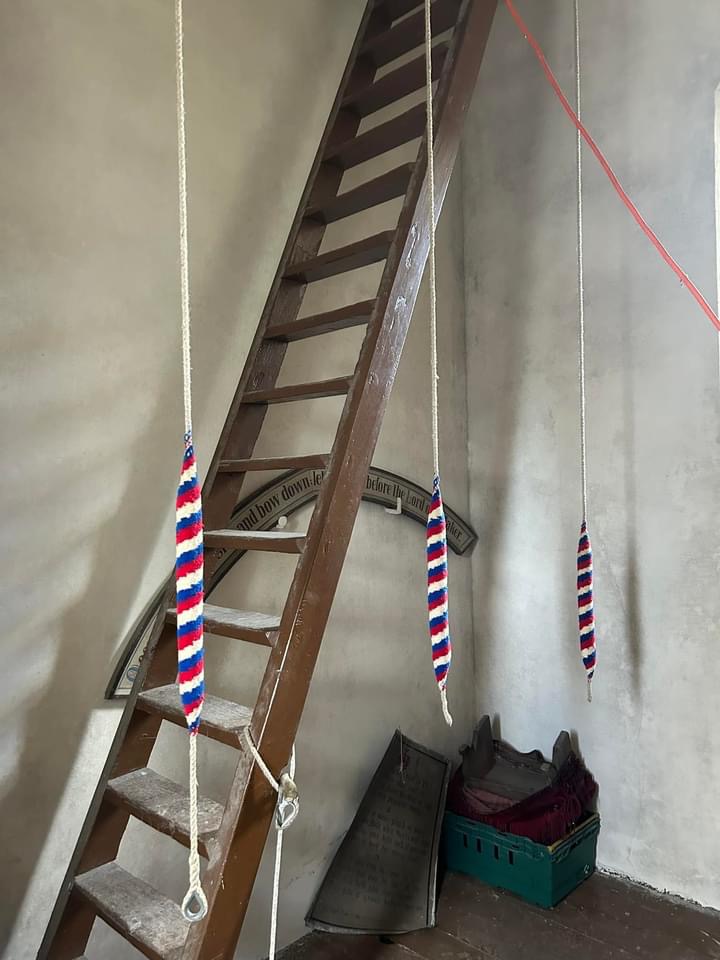
The chiming ropes
Coniscliffe, St Edwin 3 Bells
These were formerly hung for ringing (q.v.)
Crook, Our Lady Immaculate & St Cuthbert (R.C.) 8: 12cwt
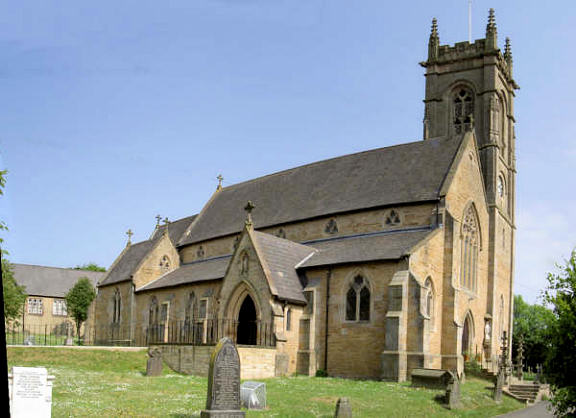 The Foundation plaque is dated 1853. The church was designed by Edward Welby Pugin. The tower was completed 1897. The church is built from irregular courses of squared sandstone. The upper stages of tower are hammer-dressed ashlar dressings. The roofs have been renewed in slate-coloured asbestos tiles. The church is aligned south-west/north-west, rather than the more normal east-west.
The building consist of an aisled nave with ritual north porch and south-west tower; a chancel with north Lady chapel and south vestry link to presbytery. It was built in “Decorated Style”, with the tower being “Tudor Gothic”.
See the source material for further details of the church
Source: https://historicengland.org.uk/listing/the-list/list-entry/1228976
The Bells
These bells are chimed using an Ellacombe apparatus. No 7 is bell hung for ringing, with traditional fittings. All are by Warner of London, 1897, the same time that the tower was built.
They hang in a wooden frame and have wooden stocks; all were cast with Doncaster canons;. Plan of frame roughly: four parallel beams run length of tower, the third and fourth of which are proper trusses for the 7th; 1-4 between first two beams, 5,6,8 between second and third beams. The clock chime was described to me by the resident priest in 1974 as an Alleluia chant. (P Rivet).
The “Bell News and Ringers’ Record” of May 14th 1898 reports:
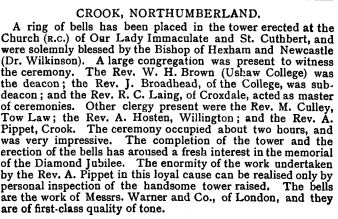
(They are incorrect to state that Crook is in Northumberland)
The video below suggests that some work was done on the chime in c.2010, as it states that the 7th bell now being rung was unringable for the previous 40 years.
- CAST BY JOHN WARNER & SONS LONDON 1897
B. CUTHBERTUS MAINE
S. EDMUNDUS CAMPION - CAST BY JOHN WARNER & SONS LONDON 1897
B. JOANNES (sic) FISHER
S. THOMAS MORE - (no inscription, but identical to the rest in appearance)
- CAST BY JOHN WARNER & SONS LONDON 1897
S. THOMAS CANTUAR - CAST BY JOHN WARNER & SONS LONDON 1897
S. ETHELBERTUS
S. EDWARDUS CONFESSOR - CAST BY JOHN WARNER & SONS LONDON 1897
S. AUGUSTINUS
PAULINUS - CAST BY JOHN WARNER & SONS LONDON 1897
S. CUTHBERTUS - CAST BY JOHN WARNER & SONS LONDON 1897
SANCTA MARIA ORA PRO NOBIS
Durham, St Giles: 3: 5-0-6
Formerly hung for ringing (q.v.)
Probably once hung for ringing (q.v.)
Ebchester, St Ebba 6: 6-3-12 in C
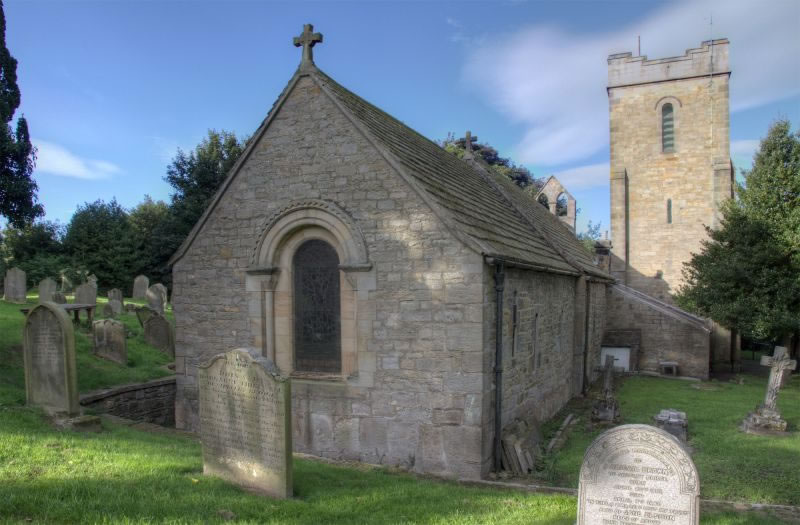 Founded in the late-12th Century under Bishop Puiset of Durham, the church was built on land granted by the Diocese to Sherburn Hospital for sick brethren to convalesce. St. Ebba’s was served by priests from Sherburn and both William de Ebchester and Robert de Ebchester progressed to become Priors of Durham in 1446 and 1478 respectively. Ebchester became a curacy in 1578 and, three centuries later, a rectory
By the 13th Century, a double bell cote had been added to the west gable. The church had a low, plastered ceiling which decapitated the Norman archway. At least some of the pews had doors, certainly those reserved for influential local families, such as the Surtees. To improve lighting, some of the narrow lancet windows had been replaced by large sash types by 1803
In 1876 the nave was lengthened, a new roof added with open joisting replacing the flat ceiling, the Norman lancet windows reinstated and large stained glass windows, donated by and dedicated to members of the Surtees family, were incorporated into the ends of the nave and the chancel. There were new, lower and open pews, which furnish the church today.
In 1902, the choir and clergy vestries were extended and the tower added in 1910. On the first floor of the tower is a clock by Potts & Sons of Leeds (now wound by electricity) and above is a belfry containing a “peal” of six bells which chime the hours and quarters and can be rung manually for special occasions
Much more information about this church can be found by following the link below
Source: https://www.ebchester.org/community/parish-church-of-st-ebba/
The Bells
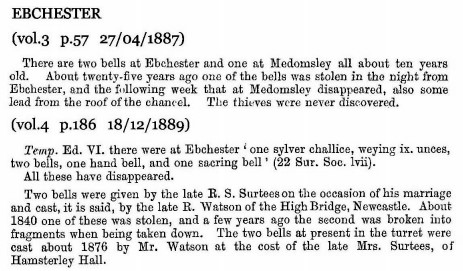
The Society of Antiquaries of Newcastle reported on the then bells 1887/9
They are now a complete chime of 6 by Taylors, 1910. The Clock in the tower is by W Potts and Sons, Leeds 1910. The bells were ordered through this company.
A Durham Diocesan Archaeological survey notes: “The fourth and final phase of extension came in 1910, when the tower was built. It had been intended to simply raise the 1907 north porch into a tower, but in the end it was removed and a rather larger tower was constructed, projecting a little beyond the west end of the nave; Kelly records this scheme as costing £1400….. The six Bells are now hung from three north-south girders, and struck by hammers. The fact that the girders are set in larger sockets in the side walls of the belfry suggests that a bell frame has been replaced.” Therefore, the chime is coeval with the tower.
Taylors Daybook on 12 October 1910 notes: Wm Potts & Sons Ltd, clockmakers, Leeds. The new chime of six bells for Ebchester, 1. 1-3-7, 2. 2-0-23, 3. 3-0-1. 4. 3-2-25, 5. 5-0-8, 6. 6-3-12, total 22-2-20 (sic) @ £6/13 per cwt £150.16.3., Inscriptions (no charge), 6 eyebolts (to be returned), 12 chiming rollers & brackets £1.4.0., [total] £152.0.3. Per Midland Railway carried forward to Rev. J.G. Gibson M.A., St.Ebba’s church, Ebchester. Less 5%
1 1-3-7 20.0″ 1910 John Taylor & Co A 1742.0Hz A-18c
2 2-0-23 22.25″ 1910 John Taylor & Co G 1551.0Hz C-19c
3 3-0-1 24.5″ 1910 John Taylor & Co F 1383.0Hz F-17c
4 3-2-25 26.38″ 1910 John Taylor & Co E 1306.0Hz E-17c
5 5-0-8 29.0″ 1910 John Taylor & Co D 1163.0Hz D-17c
6 6-3-12 32.5″ 1910 John Taylor & Co C 1038.0Hz C-14c
Inscriptions
- IN TE CONFIDIMVS
- TE LAVDAMVA
- TIBI BENEDICIMVS
- TE ADORAMVS
- TO THE GLORY OF GOD
THIS PEAL OF SIX BELLS
WAS ERECTED A.D. 1910 - EBCHESTER CHURCH (SAINT EBBA)
JOHN GEORGE GIBSON, RECTOR FROM
A.D. 1895;
Frosterley, St Michael 3: 6-3-0 in B 
The church, designed by G. E. Street, was consecrated in 1869, but has recently been made redundant due to the falling numbers in the congregation.
It has a stone flagged roof with stone gable copings and is built of dressed sandstone rubble with quoins and ashlar dressings. It has a west tower, a nave with a north aisle and north
porch a chancel and a vestry. The church was designed to seat 230. The vicarage adjoins the church on the east. Three bells were hung in 1878, a Wainwright organ installed in 1883 and a Frosterley marble font installed in 1890.
“Frosterley, St Michael – Hung dead, with 1 and 2 on the same deadstock. Provided with an Ellacombe frame for eight bells so it may have been intended to add more. These are M & S 1878; it is most likely that they were never hung for ringing.” (Peter Rivet 1976)
The parish was created in 1866 from Stanhope St. Thomas the Apostle and Wolsingham St. Mary and St. Stephen.
The following is reported in The Northern Echo of 28th August 2020:
“Now the church is to get a new lease of life after plans were submitted to transform the building into a house.
The building is Grade II listed and was built between 1868 and 1869 will be transformed into a four-bedroom house adding internal walls and a mezzanine floor.
The church organ will be removed and rehomed, but the bells, original tiled floor, and stained-glass windows will stay and be maintained by the owner.”
The Bells
A chime of three bells, but intriguingly the Ellacombe frame for sounding them is designed for eight. When Peter Rivet visited them in 1974 and 1976 they were hung dead. The bells retain their canons.
1 4-3-14 29.0″ 1878 Mears & Stainbank D
2 5-0-27 30.0″ 1878 Mears & Stainbank C#
3 6-3-0 33.0″ 1878 Mears & Stainbank B
Inscriptions
All the bells carry the inscription
MEARS & STAINBANK, FOUNDERS, LONDON
ST MICHAEL AND ALL ANGELS
A.D. 1878
Hart, St Mary Magdane 3: 2-3-14
Formerly hung for ringing (q.v.)
Hartlepool, Holy Trinity 3: 3-0-9 in G
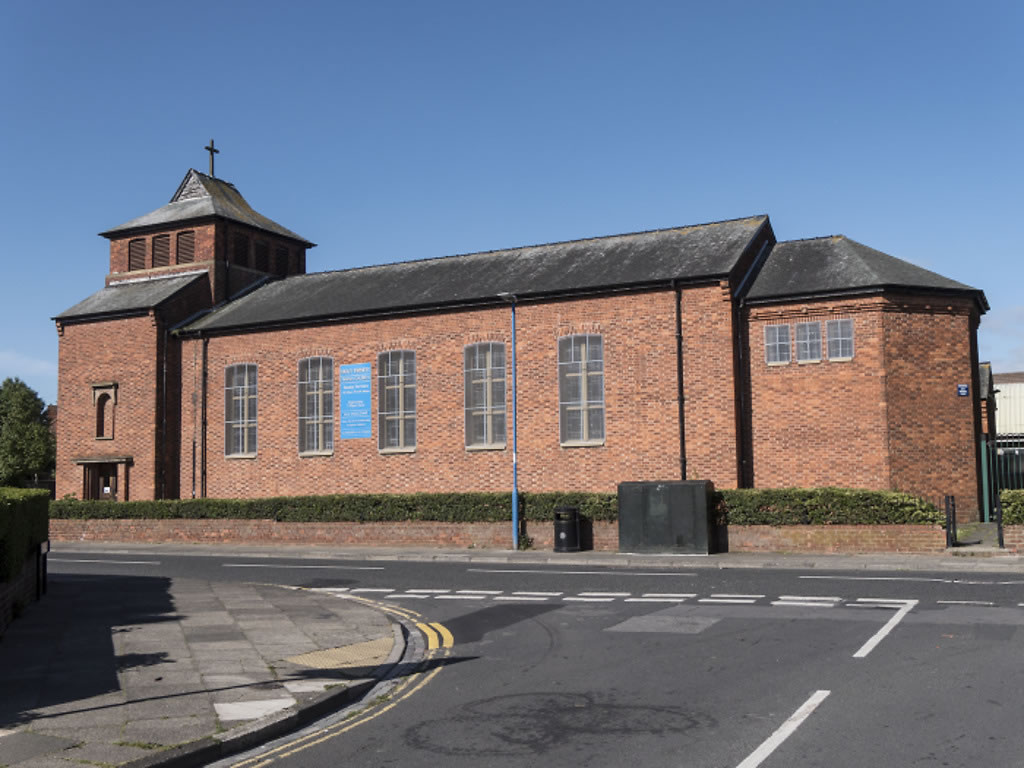
The original church opened in 1852 on the corner of Vane Street and Milbank Crescent on the Headland (from part of St Hilda’s Parish). It was demolished around 1955 and a row of shops were built on the site. This had a Taylor bell of 1855, 1-0-12, 17.0″ and which cost £21.
The current Holy Trinity in Davison Drive, West View, opened in 1957 and was consecrated by the Bishop of Durham Dr. Maurice Harland on October 18th 1958. The new church cost £26,000 and had seating for 200. The first vicar was Rev. A.G. Curtis. The three bells were installed in 1963 and the chiming manual is laid out for 8 bells.
The Bells
1 1-3-20 20.0″ 1963 Whitechapel
2 2-1-27 22.13″ 1963 Whitechapel
3 3-0-9 29.0″ 1963 Whitechapel G
Hartlepool, The Immaculate Conception (St Mary) R.C, 8: 15-2-26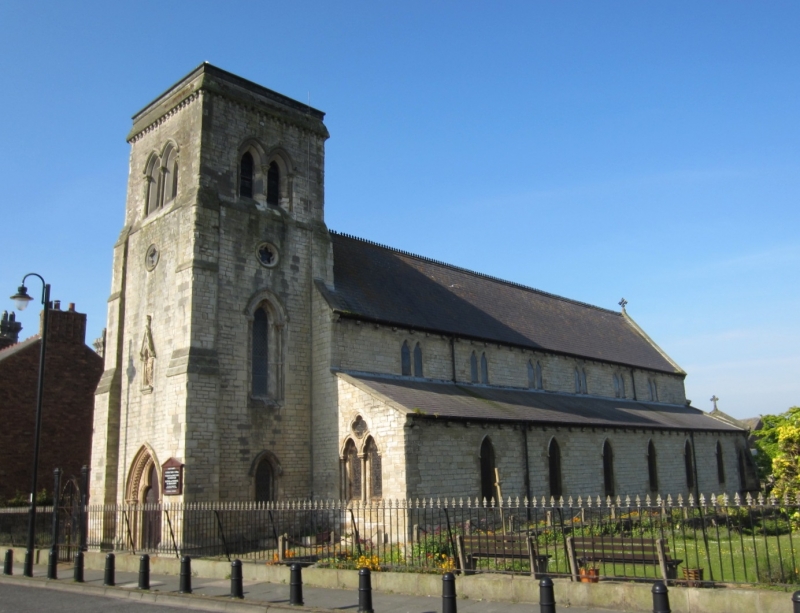
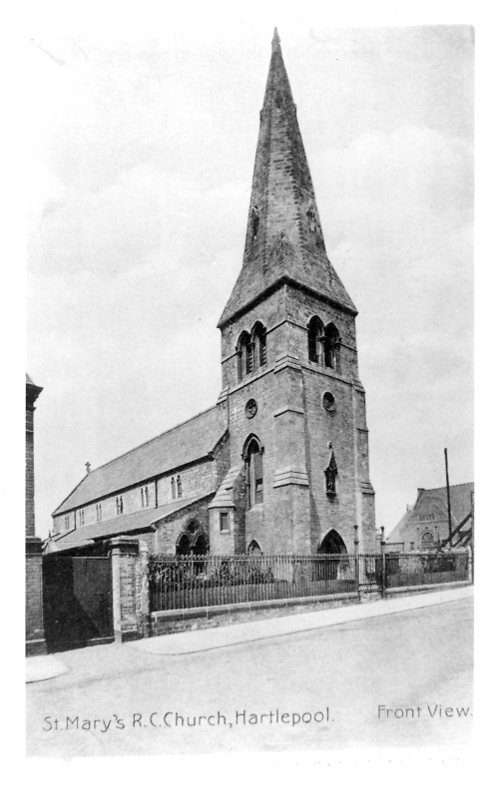
A good Early English Gothic design by J. A. Hansom, with a fine interior retaining original and early fittings of note. The church lies close to the early medieval church of St Hilda. The mission was founded in 1834 when a chapel on the corner of Prissick Street and Henry Street was built, by John Wells. Due to the success of the docks, Hartlepool’s population doubled between 1840 and 1850, with an influx of Irish workers. Fr Knight initiated fundraising for a new church, led by a Mr Lawrenson. The new church, dedicated to the Immaculate Conception, was opened by Bishop Hogarth on 28 August 1851. The builders were John Galley and the total cost, including the site, was £4000, raised largely by subscriptions. St Mary’s was the mother church of Hartlepool, but as the town expanded in the twentieth century, the population of the historic Headland area declined. The spire was demolished in 1946, due to its poor condition.
The Bells
A chime of 8 bells was supplied by Mears and Stainbank at the time of the building of the church.
From the Whitechapel Daybook 28 May 1851 – John Lawrenson Esq, Joint Stock Brewery, Hartlepool. To a peal of eight church bells, 5-1-9, 5-1-17, 6-3-0, 6-3-0 (sic), 8-1-11, 9-0-18, 11-1-18, 15-2-26. 8 dead stocks, ironwork, tolling hammers, oak frame, table for keys and fixing with cranks for ringing bells by one man, £508.7.11. (source: Chris Pickford)
1 5-1-9 1851 Mears & Stainbank, Whitechapel
2 5-1-17 1851 Mears & Stainbank, Whitechapel
3 6-3-0 1851 Mears & Stainbank, Whitechapel
4 6-3-0 1851 Mears & Stainbank, Whitechapel
5 8-1-11 1851 Mears & Stainbank, Whitechapel
6 9-0-18 1851 Mears & Stainbank, Whitechapel
7 11-1-18 1851 Mears & Stainbank, Whitechapel
8 15-2-26 1851 Mears & Stainbank, Whitechapel
Haughton le Skerne, St Andrew 3 Bells in Db
These were once hung for ringing
Horden, St Mary 8: 5-0-11 in C#
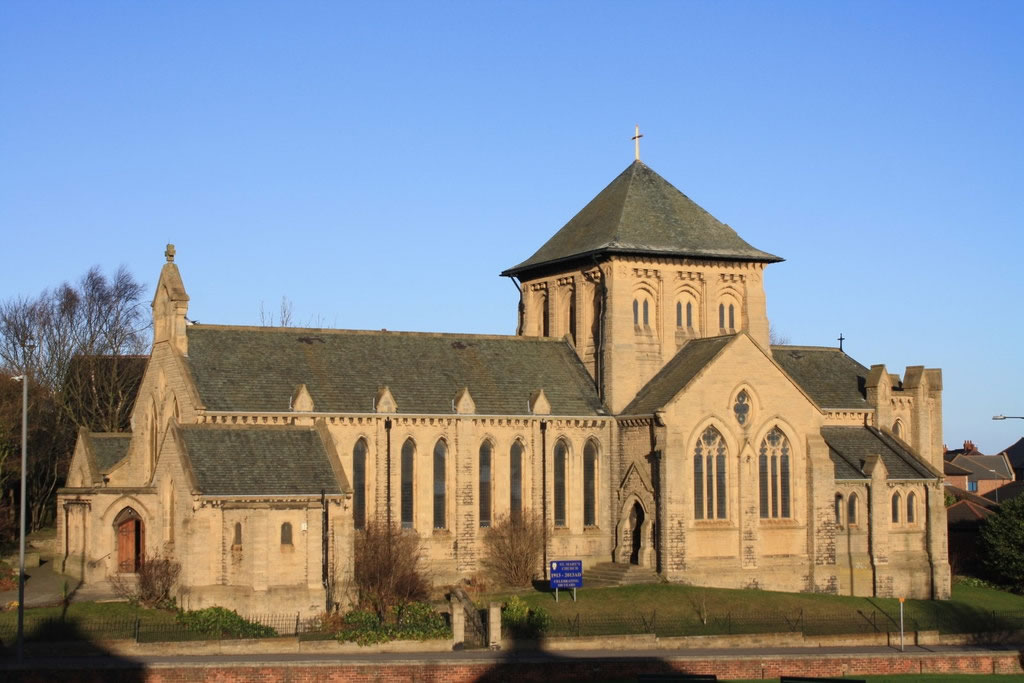 This Grade II listed church was built in 1913 by J.D. Potts and Son. It is built from textured concrete blocks and graduated green slate roof. Cruciform in plan it has an aisleless nave with western narthex and flanking vestries; north and south transepts with crossing tower; chancel with south chapel and north organ chamber and vestry. It was built in the Gothic style with lancets and Geometrical-tracery windows. There is an empty double bellcote at the west end of the nave.
Much more information about this church can be found by following the link below
Source: https://historicengland.org.uk/listing/the-list/list-entry/1158895
The Bells
The bells are a complete set from Gillett & Johnston, 1929, and are chimed from a baton clavier. They are inscribed only with the founder’s name and date. The are fixed to an RSJ over the porch roof and chimed from the Sacristy.
The Quinquennial Inspection Report in 2021 notes:
“Bells: There is a ring of eight Carillon bells, these were restored c. 1996. The Carillion is rung in the sacristy. The bells are on the outside of the building underneath a c2000 pitched roof underneath a covering with timber louvred sides. In June 1989 the bells were overhauled and returned.” I would not think that work was done twice in such are short time and that at least one of the dates is incorrect.
1 0-3-22 16.25″ 1929 Gillett & Johnston 2192.0Hz C#-20c
2 1-0-5 16.88″ 1929 Gillett & Johnston 2068.0Hz B#-21c
3 1-1-17 18.88″ 1929 Gillett & Johnston 1840.0Hz A#-23c
4 1-3-23 21.0″ 1929 Gillett & Johnston 1639.0Hz G#-23c
5 2-3.20 24.25″ 1929 Gillett & Johnston 1464.0Hz F#-19c
6 3-1-24 25.5″ 1929 Gillett & Johnston 1380.0Hz E#-21c
7 4-2-7 28.0″ 1929 Gillett & Johnston 1228.0Hz D#-23c
8 5-0-11 30.0″ 1929 Gillett & Johnston 1096.0Hz C#-20c
Kirk Levington, St Martin 3: 2-1-8
The village is sometimes spelled Kirklevington.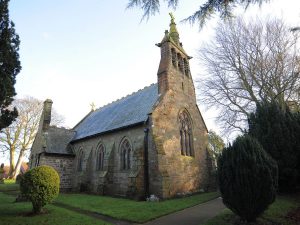
The current church was built in 1882-3 in the Decorated Gothic style. It was built on the site of, and retaining the chancel arch and south doorway of, a 12th century church. It also retains the 13th century chancel, with upper part of east wall rebuilt. The newer part of of church is built of ashlar, with a bellcote of three openings under a high pitched hipped roof with a little octagonal tower and spire in centre. There are Mediaeval grave slabs in the vestry and nave and they are late Georgian wall monuments.
The bells hang in a triple opening bellcote at the west end of the church. there is a report of work being done on the bells in 1989, but details are certainly inaccurate, as it says that they were recast. “Two ladies of the parish were instrumental in founding the Bell Fund early in 1989. Sufficient funds were raised to remove, recast and rehung the bells. A few months later the effort was rewarded by a visit from the Bishop of Whit by to lead the service of rededication of the bells of St Martin’s.”
1 1-1-9 18.75″ c1399
2 2-0-14 21.00″ 1681 Peter Wood
3 2-1-8 24.00″ 1884 John Warner & Sons 1286.0Hz E-43c
Middleton in Teesdale St Mary the Virgin 3: 7-3-14
Now a swing chime. Formerly hung for ringing (q.v.)
New Shildon, All Saints 3: 8¾cwt – lost bells
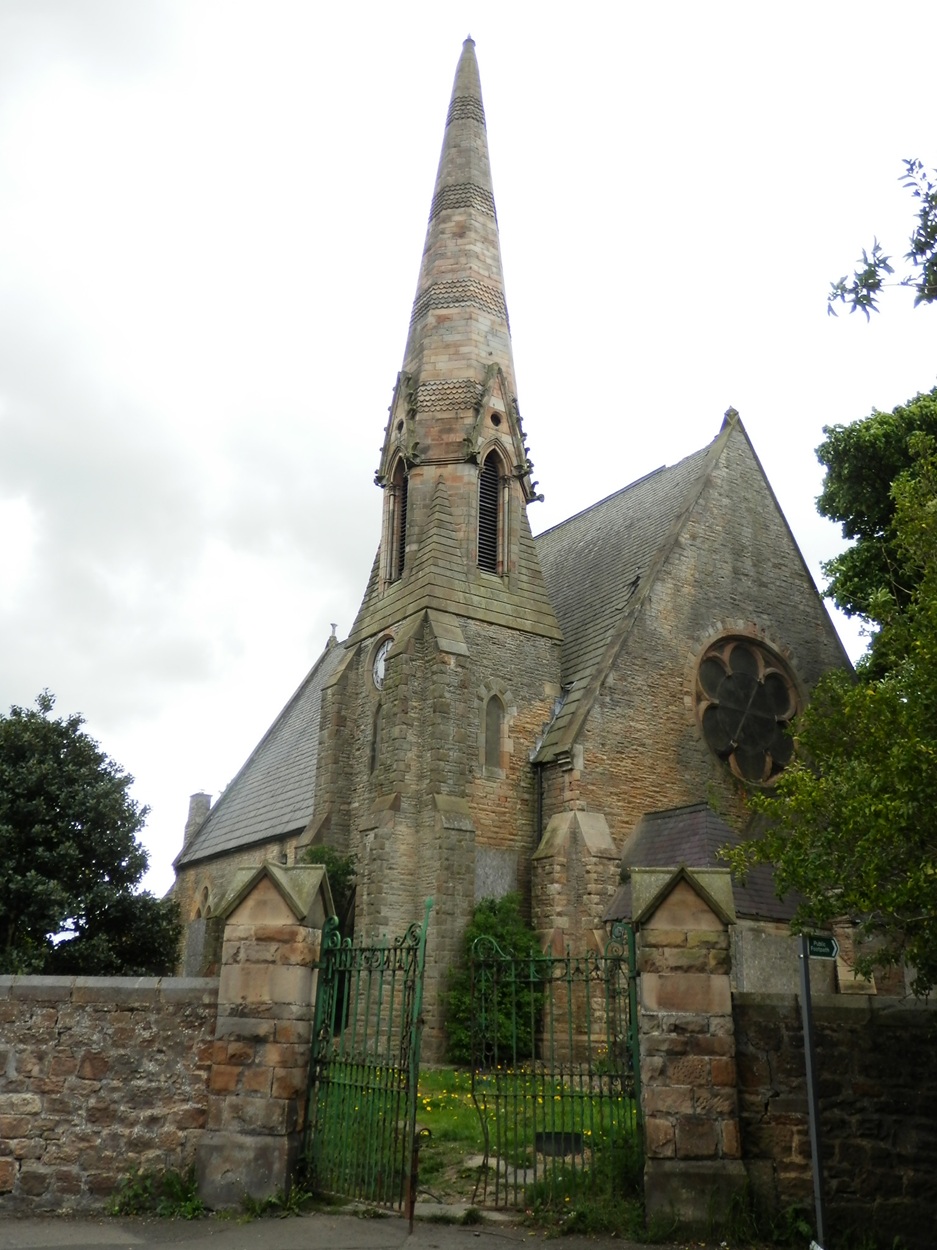 All Saints Church was built 1868 -1869, designed in the ‘Early English style’ by J.P. Pritchett. It was the parish church for New Shildon. The last service in the church was conducted by the Bishop of Durham in November 1998. The building has stood empty ever since. Planning permission was granted in 2015 for conversion to residential use, but this has not progressed. The former church is Grade II listed on the National Heritage List for England.
The bells were removed on the closure of the church and were used at other churches via The Keltek Trust. The smallest bell has been installed at Potterhanworth (treble of 6, 2-1-7), Lincolnshire; the middle bell at Caunton, Nottinghamshire (Second of 6, 3-2-6) and the largest bell at Sandford Orcas, Dorset (replacement for fifth bell, now 35.5″, 7-3-11).
Bells 1 and 2 are both inscribed MEARS & STAINBANK, FOUNDERS, LONDON, 1869. Waist: SMITH & SONS, / ST.JOHN’S SQUARE, / CAMBERWELL
The church as of early 2026 remain boarded up and deteriorating in condition. Some of the stained glass windows have been removed and installed in St Johns Church Shildon.
1 2-1-26 22.13″ 1869 Mears & Stainbank, London 1728.0Hz A-32c
2 3-3-4 27.00″ 1869 Mears & Stainbank, London 1300.0Hz E-24c
3 7-3-12 36.75″ 1869 Mears & Stainbank, London 852.0Hz G#+44c
Norton, St Mary the Virgin 3: 6-2-16
Formerly hung for ringing
Pelton Holy Trinity 6: 5-3-17 in C – Lost bells
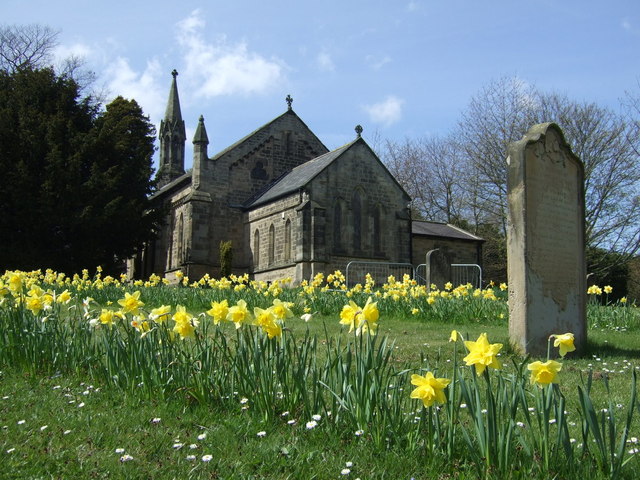 The church was built in 1841-2 by George Jackson. It was built from dressed stone and has a purple slate roof. There is a west tower and spire; an aisleless nave and a south porch; a chancel and a north vestry. It was built in the “Early English” style.
The tower has a square-plan lower stage, gabled on west, has pointed doorway, with colonnettes, loop and blind trefoil in gable; roof of lower stage dying into octagonal clock tower; octagonal belfry has trefoil-headed bell openings, each under a crocketed gablet; octagonal spire and finial.
More details of the church can be found in the source material
Source: https://historicengland.org.uk/listing/the-list/list-entry/1120963
Taylors Inspection Book shows that John W Taylor (jun) visited the church to assess the project on 14th June 1911. He noted “Very small turret (measurements given) with a louvred octagon on eight small pillars in the angles. Present bell 28½” . There are no other details given of that bell at this point.
Taylor’s Daybook notes on 8th February 1912, the day the job was completed “The Vicar and Churchwardens, Pelton (Rev. C.F.B. Haslewood, Vicar). The new chime of six bells, The new chime of six bells, (weights of the bells), total 19-2-8 £137.0.0., Inscription (75 letters) £1.5.0., Headstocks, clappers, clavier & necessary connections £19.0.0., Framework £11.0.0., Fixing £10.0.0., Carriage £6.0.0., [Sub-total] £184.5.0., Credit By the old bell 3-1-23 £15, [Nett total] £169.5.0.; We therefore know the weight and diameter of the existing bell, but not its founder.
The first attempt to cast the tenor came out too flat. It was 31.13″ in diameter and weighed 5-2-14. It was supplied instead to St George’s church in Leicester in 1913 for temporary used and bought by them in 1921.
They were hung on 3 levels, 1 and 6 on top, 2 and 5 in the middle and 3 and 4 on the bottom. (GPE)
The bells were removed in 1991. They were transferred to St Luke, St Helier, Jersey, in 1993, with two new trebles to complete the octave.
1 1-2-7 19.50″ 1911 John Taylor & Co 1739.0Hz A-21c
2 2-0-18 21.68″ 1911 John Taylor & Co 1552.0Hz G-18c
3 2-3-3 24.06″ 1911 John Taylor & Co 1383.0Hz F-17c
4 3-0-5 25.00″ 1911 John Taylor & Co 1299.0Hz E-26c
5 4-0-14 27.63″ 1911 John Taylor & Co 1162.0Hz D-19c
6 5-3-17 31.13″ 1911 John Taylor & Co 1036.0Hz C-17c
The front 5 bells simply have the foundry mark and “1911” on their waists. The tenor bell is inscribed
| IN MEMORY OF THE WHELDON FAMILY 1911 C.F.B. HASLEWOOD VICAR J.T. HESLOP } W.CRAINE } CHURCHWARDENS |
This inscription was removed when the chime was transferred and replaced with another in specially cast letters applied with epoxy resin.
Pittington, St Laurence 3 Bells 3½cwt
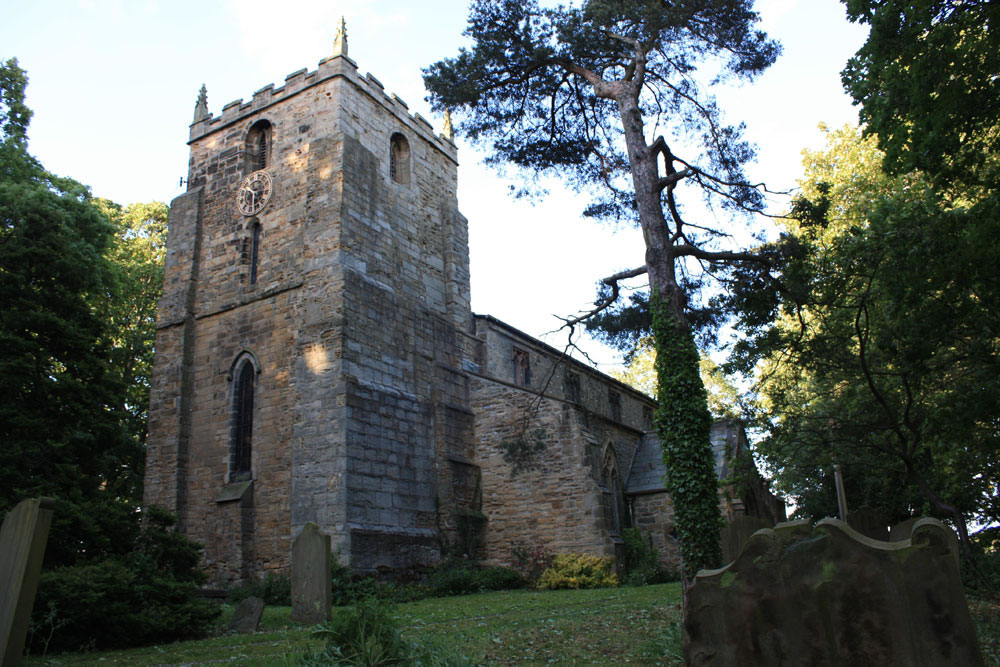 The church was built in the 11th or early 12th century; circa 1180-1195 addition of north aisle and chancel; a late 12th/early 13th century tower; c.1225-1250. The south aisle was added and nave extended eastwards by one bay. There is a 14th century porch; a 15th century belfry stage of tower.
The aisles were rebuilt and the nave extended eastwards, the chancel and porch rebuilt in 1846-7 by I. Bonomi with J.A. Cory. In 1897-9 the chancel aisles added by W.S. Hicks and in 1905 the chancel was lengthened and raised.
There are important wall paintings on the jambs and soffit of the westernmost of the original nave south windows.
Much more information about this church can be found by following the link below
Source: https://historicengland.org.uk/listing/the-list/list-entry/1310892
The Bells
There are three bells here, a treble by Carr’s of Smethwick, a middle bell possibly by John Hoton of York and a tenor bell by an unknown founder. The treble is a replacement for an earlier bell.
Rev J. T. Fowler gave some details of the bells and frame in his pamphlet “On Some Church Bells in the City and Neighbourhood of Durham, at Newcastle-on-Tyne, &C”, (1865) but nothing conclusive on their hanging:
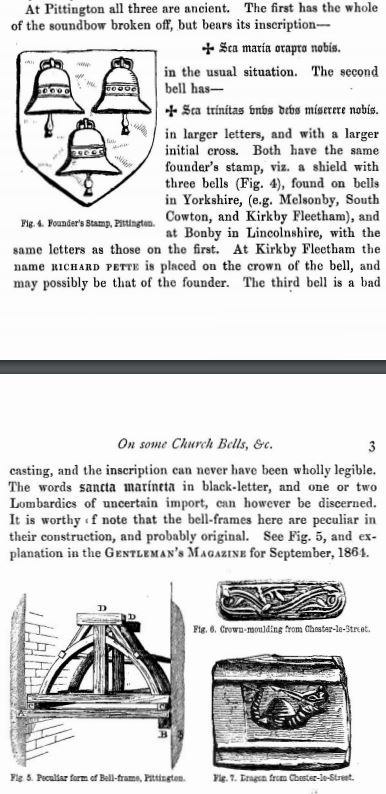
A diocesan survey by Peter Ryder in October 2000 states, “The Bell Frames are of considerable interest, certainly being one of the oldest sets in the county; …..There are three parallel pits (Pickford 3.1) and four trusses are of short headed type with sills, king post, short head, and raking struts from braces to head (Pickford type 3C). Many of the timbers show evidence of re-use from some earlier context; many are badly decayed (the easternmost sill is broken) and care has evidently been taken to preserve the frame in position. The three bells are now hung from a recent beam carried on the heads of the old trusses.”
Peter Rivet tells me:
“This might credibly be a lost ring, but that depends whether the bells were ever equipped with full wheels as the frame in use in 1975 was a very early one The Newcastle Society of Antiquaries reported on this tower in 1887/88 along with details of the three bells then in use, but did not say anything about wheels:

When I went there the frame was still in existence, along with bells 2 and 3, but the treble had been replaced by the much smaller replacement, inscribed:
- CHARLES CARR
SMETHWICK
1897
The Carr bell had no clapper but the other two retained theirs. All three bells had been hung dead, for chiming with an Ellacombe apparatus. The clock (Potts 1896) was arranged to chime on the second bell, which I commented was the best of a poor lot musically. The whole installation had the appearance of being put into working order as cheaply as possible and the floors of both the bell chamber and the room below were much decayed; my notes from 1975 say that only the bell frame appeared safe to walk on!” These notes say:
“Pittington, St Laurence – The very early frame for three was still there, with the medieval 2 and 3 still hung in it, complete with clappers, but the bells were hung dead. Whether they had been rung in the modern sense is uncertain as the frame would probably not have been suitable for full circle ringing. The pre-reformation treble had been replaced by a much smaller Carr bell of 1897. Charles Carr had also provided an Ellacombe chiming apparatus. The woodwork in the tower generally was in extremely poor condition – only the frame was really safe to walk on – so it is hardly surprising that the bells have been rehung since then.”
1 2cwt 20.38″ 1897 Charles Carr
2 2¾cwt 23.75″ 15thC ?John Hoton
3 3½cwt 25.00″ 16thC Unknown
Redmarshall, St Cuthbert 3 Bells
Formerly hung for ringing (q.v.)
Romaldkirk, St Romald 3: 7-1-23
The church is situated in the county of Durham, but is in the Diocese of Leeds.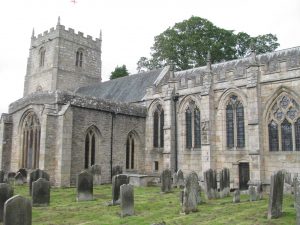
The church was built between the 12th and 16th centuries, but incorporating Saxon masonry. The nave was built in the late 12th/early13th century. The north aisle and the north transept were rebuilt in c.1330. The south aisle and south transept are from the late 13th century. The chancel and north vestry are from c.1360. The tower was added in the 15th century. The north wall of the vestry was rebuilt and the chancel restored in 1890-4. The organ chamber was added in 1929.
The two older bells retain their canons and the middle bell was cast with a flat head. The treble has been one-eighth turned. The wooden frame is 17th Century, truss 5.A and layout 3.1.
There is a disused bell by an unknown founder, cast in the 19th century with a diameter of 12″
1 4-2-12 29.75″ 1711 Samuel Smith II 1073.0Hz C+43c
2 5-3-2 31.75″ 1954 Gillett & Johnston 954.0Hz Bb+40c
3 7-1-23 35.50″ 1688 Samuel Smith I 853.0Hz Ab+46c
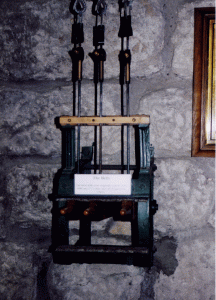
Andrew Aspland reports here “Chimed by a small baton clavier – there can be few sets of three bells played from such a mechanism!”
Seaham Harbour, St John 8: 9-0-12 in Bb
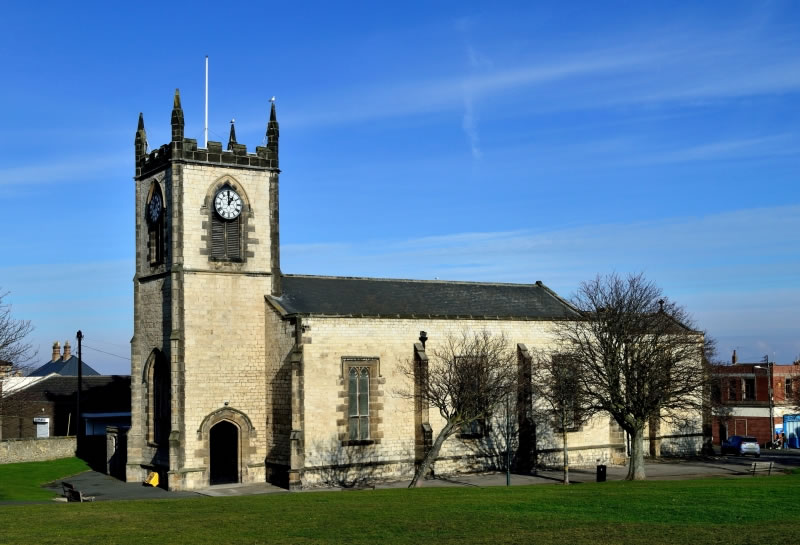 The church, in Hardy Street, was built in 1935-40 by Thomas Prosser, Sen. The foundation stone was laid on February 11th 1835, by Frances Anne, Marchioness of Londonderry. The church was consecrated on June 7th 1840.
It is built of limestone in the Perpendicular style. The north aisle was added in 1860-1 by Thomas Austin. The chancel was extended and vestries added om 1885-6 by R. J. Johnson.
On May 16th 1943 a huge landmine destroyed 113 houses and a methodist church only 200 yards from St. Johns. It killed 37 men, women and children and more than 1000 properties were damaged. Every window in St. Johns was blown out, except the Frances Anne Memorial Window. The windows were replaced in 1953.
The Bells
Complete set by Gillett & Johnston in 1929. They commemorate the centenary of Seaham Harbour. The bells were cast with flat tops and are sounded from a baton clavier. The foundry records show that the 5th was cast on 12th December 1927 and the rest between August and October 1929.
The bells were rehung between two pairs of new galvanised steel channels with new bolts in 2005 according to the Quinquennial Inspection Report of 25th July 2023.
1 1-1-19 18.88″ 1929 Gillett & Johnston 1840.0Hz Bb-23c
2 1-2-20 20.13″ 1929 Gillett & Johnston 1740.0Hz A-20c
3 2-1-20 22.25″ 1929 Gillett & Johnston 1548.0Hz G-22c
4 3-0-22 24.88″ 1929 Gillett & Johnston 1380.0Hz F-21c
5 4-2-3 28.0″ 1929 Gillett & Johnston 1228.0Hz Eb-23c
6 5-0-2 28.88″ 1929 Gillett & Johnston 1160.0Hz D-22c
7 6-1-14 32.0″ 1929 Gillett & Johnston 1034.0Hz C-21c
8 9-0-12 35.25″ 1929 Gillett & Johnston 920.0Hz Bb-23c