Middleton in Teesdale, St Mary the Virgin 3: 7-3-14 MAP
 Church History
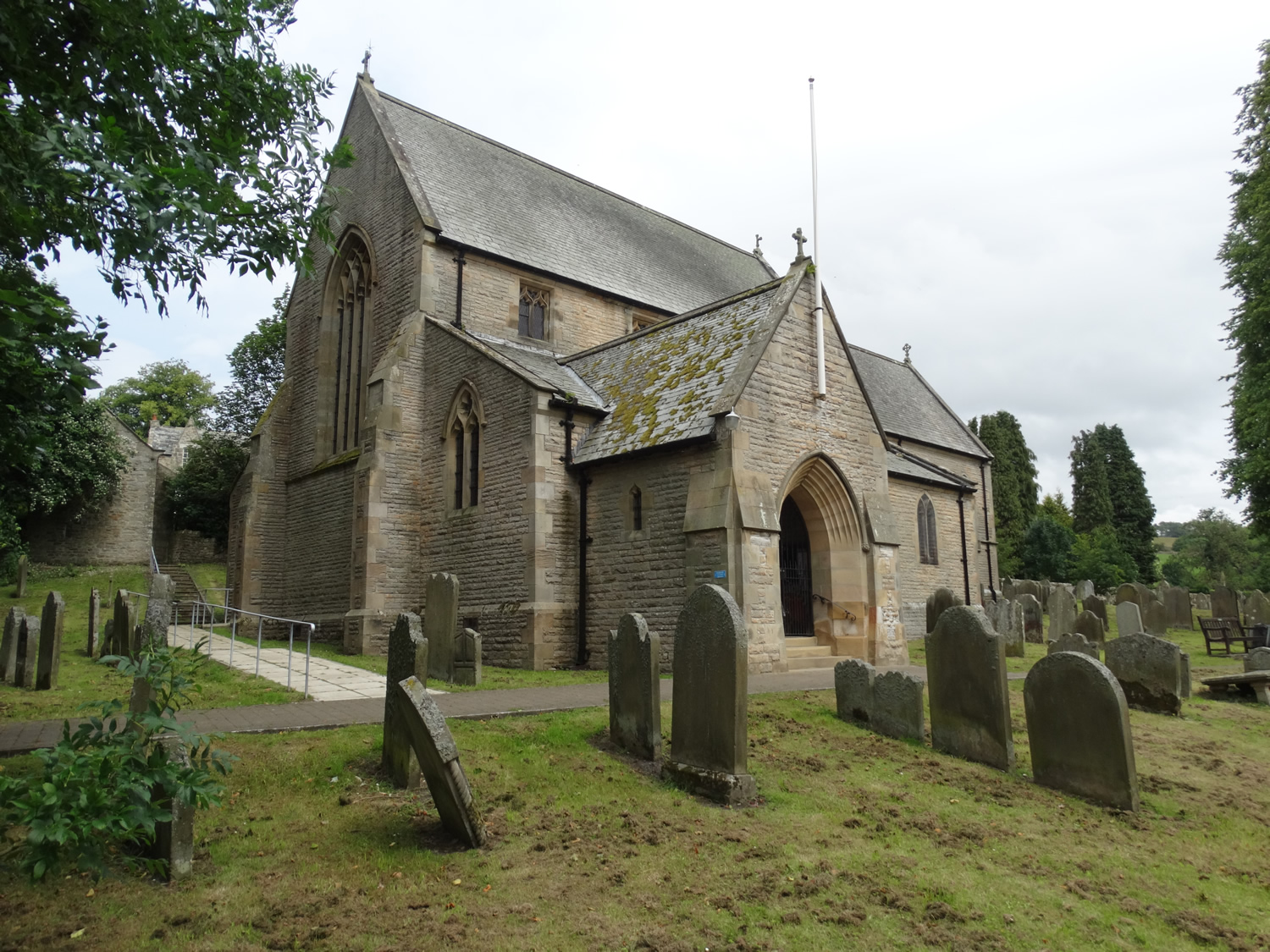
There was a church on the site of St Mary the Virgin, Middleton-in-Teesdale in 1170 and it was part of the possessions of the Monastery of St. Mary in York. The 13th century church was demolished in 1876 after which the current one was built. The bells are in a detached tower, which is just visible at the left side of the photo.
The current Grade II listed church was built 1878 by C. Hodgson Fowler. It was built from squared sandstone in courses of varied thickness with quoins and ashlar dressings. There is a roof of graduated grey/green slates, with roll-moulded ridge tiles and stone gable coping. There is a 4-bay aisled nave with a south porch; a 3-bay chancel with a north vestry and an organ chamber. There are steps up to an open arch in the buttressed porch under a steep gable. There are inner double boarded doors with strap hinges; both arches pointed, the outer with 3 hollow chamfers under leaf-stopped dripmould, the inner with beakhead corbels, 2 wide chamfers. There are pointed-arched windows, with cusped Y-tracery in aisles and chancel. There is a 3-light window in the east end of the south aisle with intersecting tracery and a similar style 4-light west window. There is cusped reticulated tracery in 5-light east window and a stepped sill string to chancel. There are 2-light square-headed clerestory windows with cusped tracery. There are stone cross finials on nave and on lower the chancel and there is coping also on the pent aisle roofs.
The interior is painted plaster with ashlar arcades and dressings; a collared king-post nave roof on corbels and a panelled chancel roof. There are double-chamfered pointed arcades on octagonal piers and a similar chancel arch on head-corbelled shafts. There is a re-used 2-light medieval window in organ chamber. The tub font is on a medieval octagonal pedestal and it has 3 chamfered medieval shafts. There are 14 grave covers (some incomplete) with incised decoration, and some fragments of chevron moulding, built into the north wall. The north chancel wall has small brass to Simon Comyer (d.1620), with brass coat of arms above. There is a 19th century chancel screen and furnishings. The glass includes some from the late 19th century and 2 windows dated and signed 1982 by the G. Maile Studio, Canterbury – including St. Miriam, to an organist. There is an early 19th century poor box with 2 locks and and inscription in Roman capitals.
Source: https://historicengland.org.uk/listing/the-list/list-entry/1322768
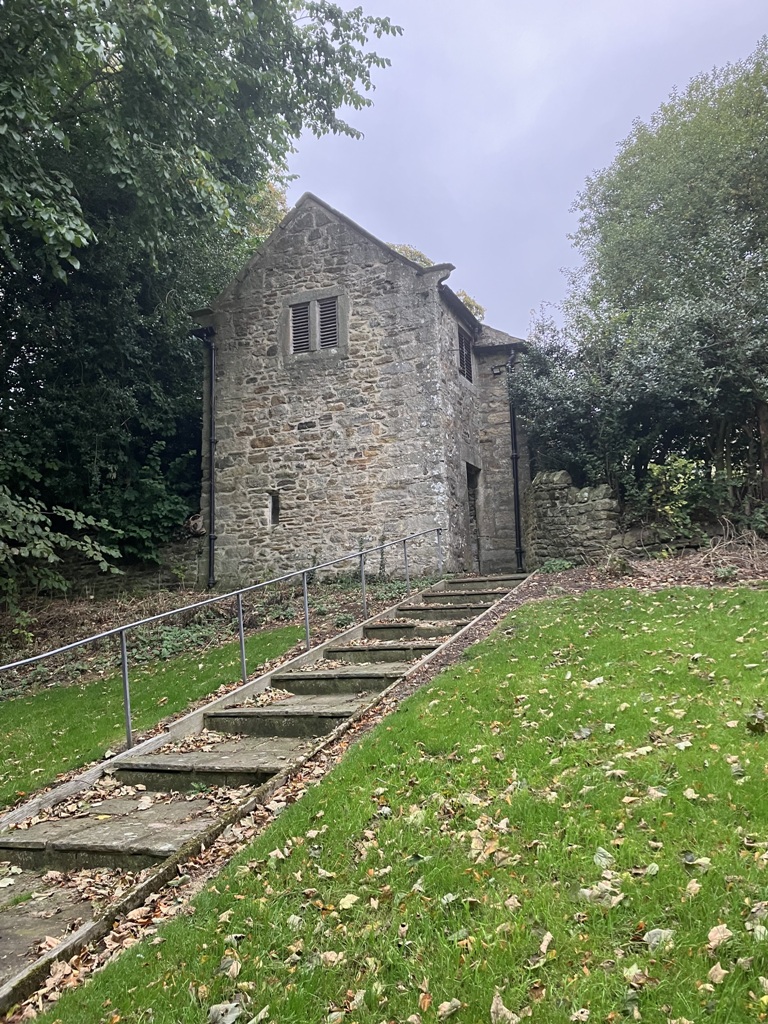
The belfry is Grade II listed. It was listed separately from the church when Peter Rivet spotted that it has not been included in the church’s own listing! It is said to have been built in c.1567 for the gift of 3 bells. It is built from sandstone rubble, with millstone grit quoins and ashlar dressings. there is a stone-flagged roof with stone gable copings. It has 2 storeys and one bay. The gabled south elevation has a wide slit at the left on the ground floor. There is a flat stone mullion and surround to 2-light louvred opening in the gable peak. The gable has triangular-block edges, and coping on curved kneelers. The right return has boarded door, with irregular-block jambs and flat stone lintel to left of centre. There is a 2-light flat-mullioned bell opening above and a slight projection at right.
Pevsner states that the first tower was probably timer-framed and that it was rebuilt in stone in the late 17th or early 18th century.
https://historicengland.org.uk/listing/the-list/list-entry/1203582
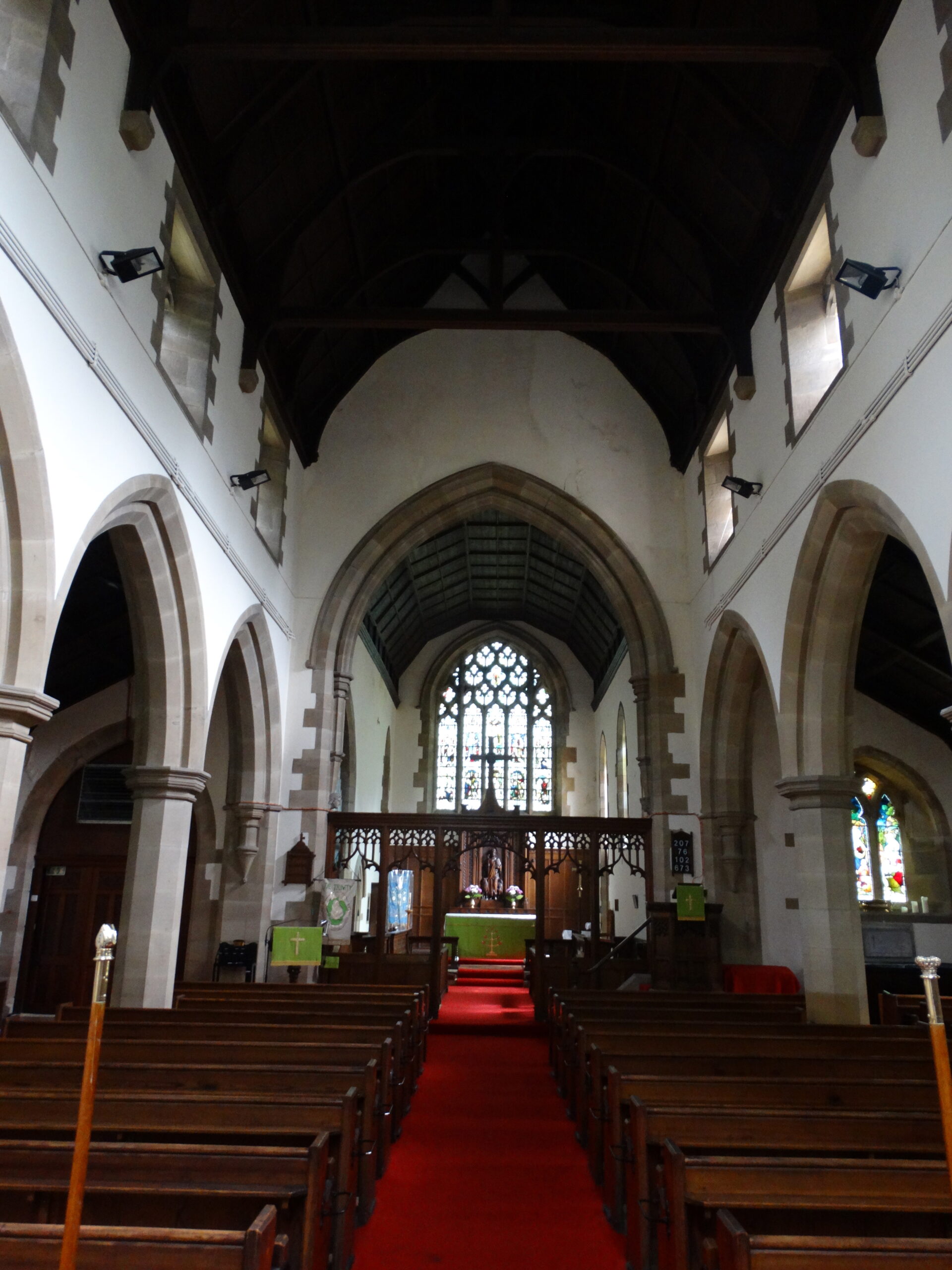
The interior of the church. Source: Northern Vicar
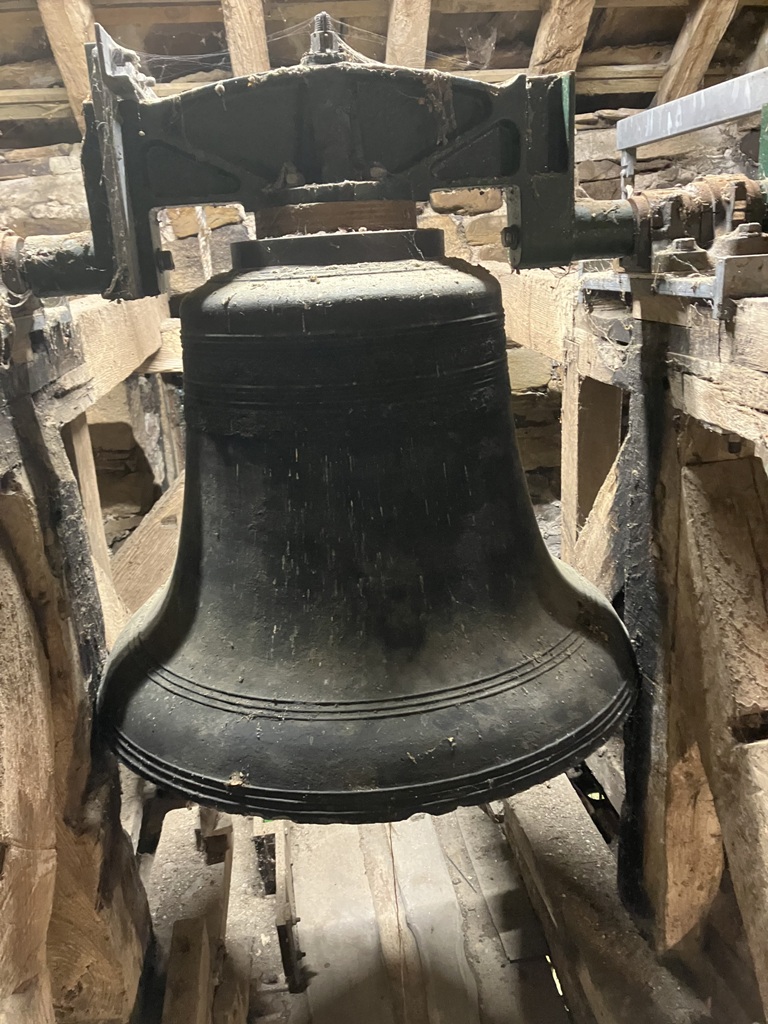
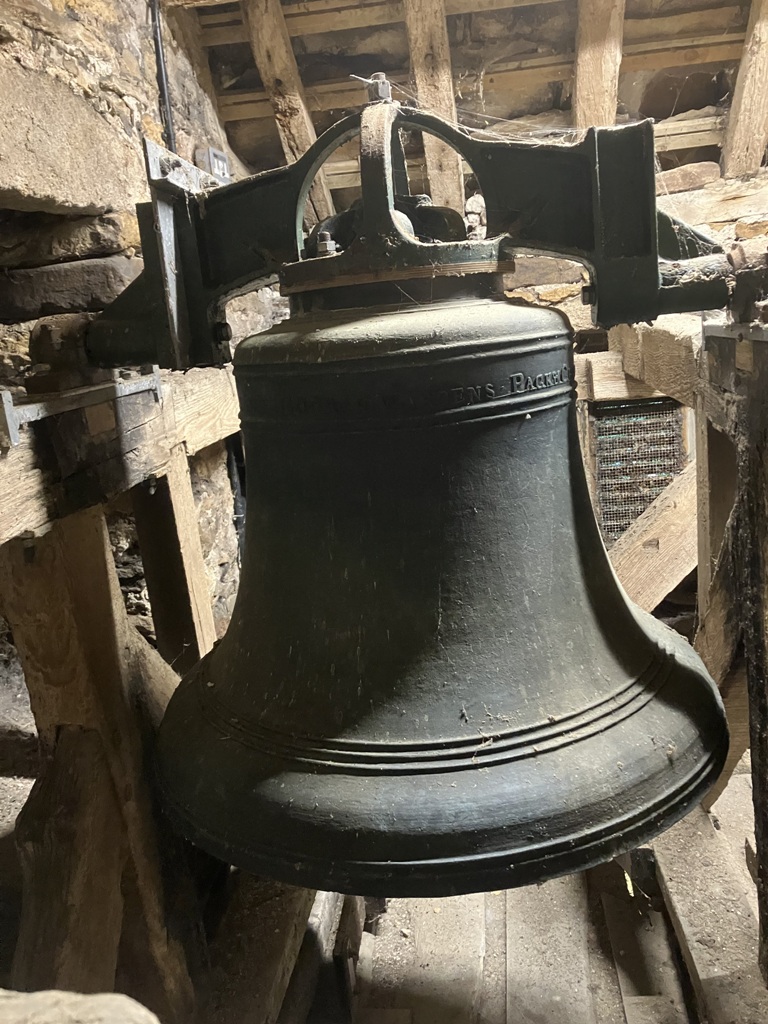
The Bells
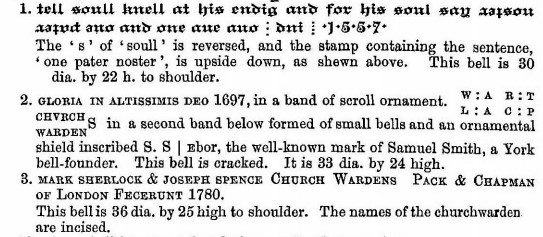
These bells were hung for ringing until c.2000, the faculty being issued on December 9th 1999, when they were converted into a swing chime. The middle bell has been welded. As seen below, it was already cracked by 1890.
Peter Rivet tells me:
“The frame was interesting as it appeared to have been extended at some stage to accommodate the additional forces associated with full circle ringing. According to my notes the second bell had a crack which had been drilled to stop it spreading; I’m pleased to see that it has been welded, as I thought it quite a fine casting.”
A Durham Diocesan Archaeological Survey, by Peter Ryder in 2001 notes:
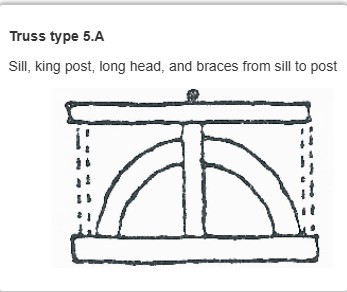
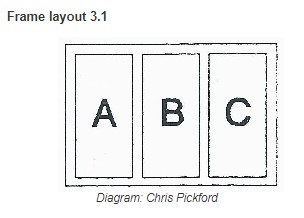
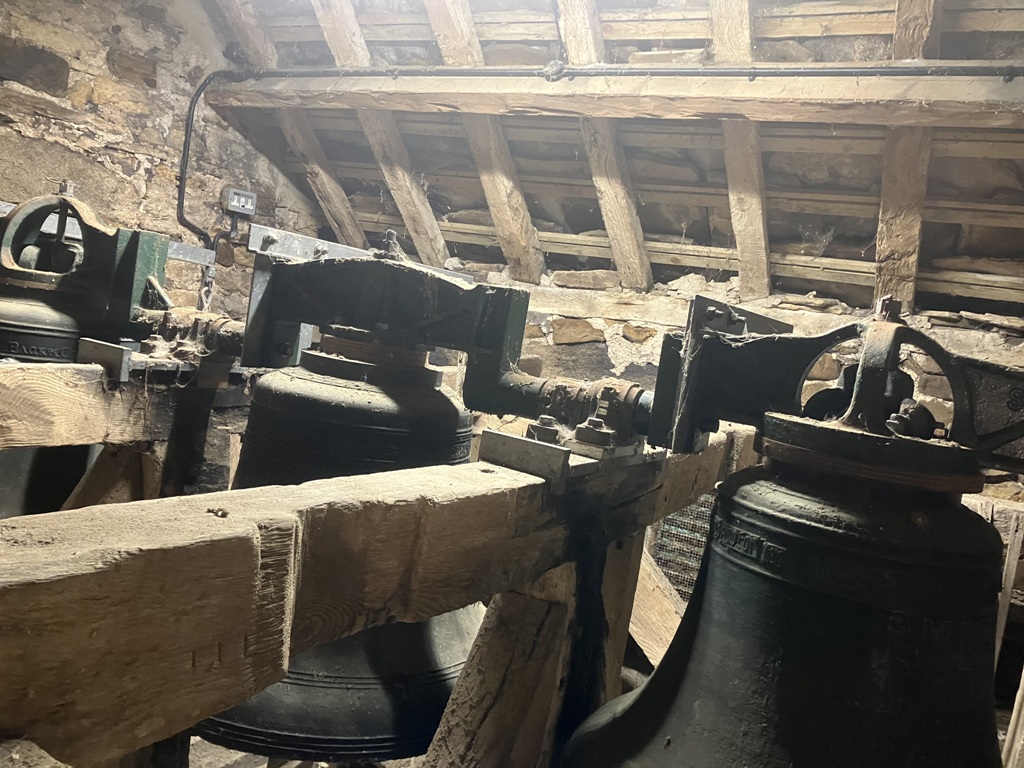
“The Bell Frames are long-headed and consist of three parallel pits, the bells swinging east-west (Pickford layout type 3.1), and have trusses with straight braces from the sill to the central post (Pickford type 5A) with type 1 king-posts (parallel sides, even thickness); there are end posts with jowelled heads and (except for that at the south-east corner) feet. The ends of the truss heads are bolted to the heads of the end frames, which each have a central king-post and braces like those of the trusses. A number of the timbers have sockets and mortices, apparently indicting their re-use, and various members have been added at different periods to improve the structural stability of the frame; a significant amount of timber has been renewed in the recent restoration of the frames; the three bells are hung on modern metal headstocks for swing chiming.”
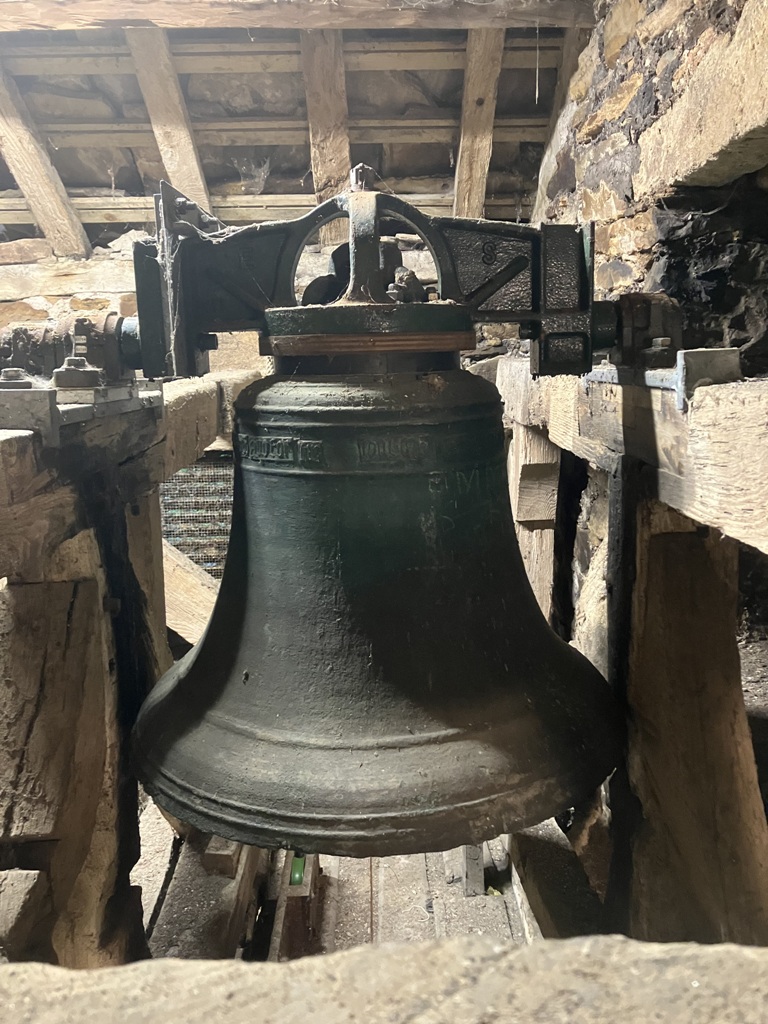
The treble is the sole survivor of the set of 3 that was mentioned in the will of William Bell. An historical note states from 1558 that, “A ‘bell house’ in the churchyard was constructed in accordance with instructions in the will of Rev William Bell D.D., who bequeathed three bells, and twenty trees to be used in the construction of the bell frame. He also asked for an aisle to be added to the church, but it would appear this was never constructed”.
The churchwardens’ names on the tenor have been cut with a chisel, and not inscribed during the casting of the bell. The treble and tenor retain their canons and those on the middle bell have been removed. All three bells have been one-eight turned.
1 5-0-11 30.75″ 1557″ Unknown 1134.0Hz D-61c
2 6-1-13 32.75″ 1697″ Samuel I Smith 1019.0Hz C-46c
3 7-3-14 35.88″ 1780″ Pack & Chapman 858.0Hz A-44c
Inscriptions
The “Newcastle Society of Antiquaries” gives these in its report of 26/5/1890, as well as the known history of the bells at that time:
 |
 |
| The Bells | Sound Clip |
 |
 |
| Sound Clip | Sound Clip |
| The Bells. Source: Tim Jackson | |