Elswick, St Stephen, Low Elswick 8: 27-2-8 in D MAP
 Ringing:
Bells are unringable, due to issues with the tower
Nearest Metro Station: Central Station – Elswick is not on a Metro line. Both the Number 8 bus and the Number 22 bus stop nearby, the better one depending upon your starting point.
Church History
This area was once a hive of industry, being close to many heavy engineering works, including shipbuilding and armaments. With the decline of these industries in the second half of the 20th century, in particular, this became one of the most deprived areas in the country.
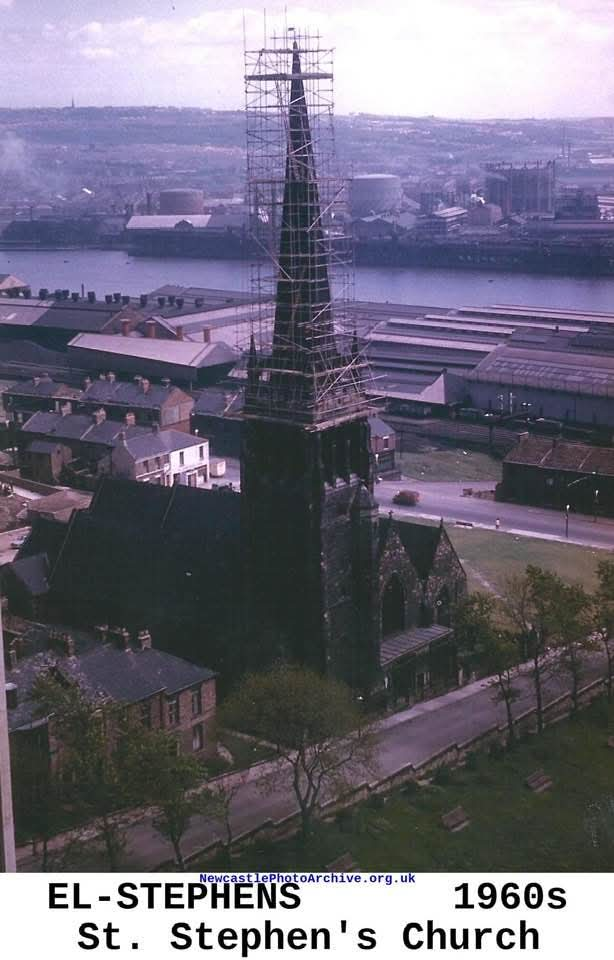
This church, declared redundant 1st January 1984, was completed in 1868 by Johnson from snecked sandstone with ashlar dressings. The foundation stone was laid on November 19th 1866 by William Armstrong, famous for his Elswick munitions factory and shipyards.
The opening of the church was reported by the Newcastle Guardian in their edition of February 22nd 1868:
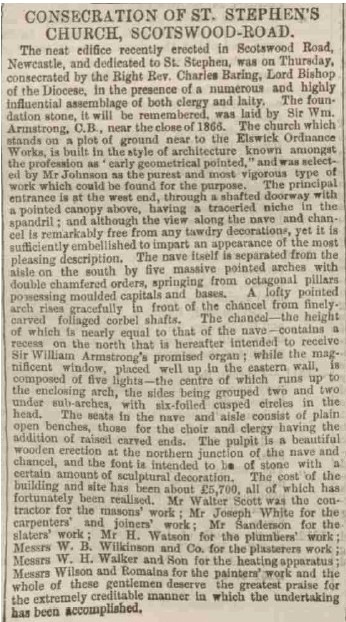
The tower and spire were added in 1878-80. There were Welsh slate roofs with stone gable copings. It had an aisled nave with north-west tower and low west porch; north transept; chancel with north aisle. It was built in the decorated style.
The 3-stage tower over aisle has triple belfry openings, corbel table, and battlements 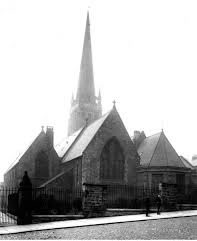 with corner flying buttresses to tall octagonal stone spire with lucarnes. West porch had shafts and label strings to square-headed central window and flanking doors. There were high aisle windows in the north and west and with bar tracery on south an a larger east window. There were steeply-pitched roofs to the nave and aisles. The interior was stripped of its fittings except for alabaster memorials in memory of members of the Cruddas family and mosaic after Holman Hunt “Light of the World” in memory of Rev. Joseph Duncan, vicar 1901-11. Part of the architect’s original plans, the tower was constructed at the behest of Mr. W. D .Cruddas, Churchwarden, in memory of his wife, Margaret. Unfortunately, Mr. Cruddas died before construction was complete in 1880. His children donated the heavy peal of eight bells, cast by John Taylor & Co. of Loughborough.
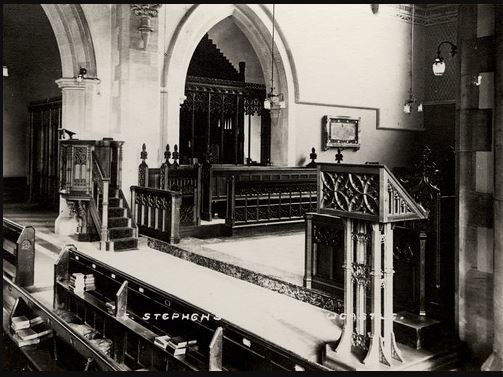
(The interior of the church in 1912. Source: Newcastle upon Tyne Libraries)
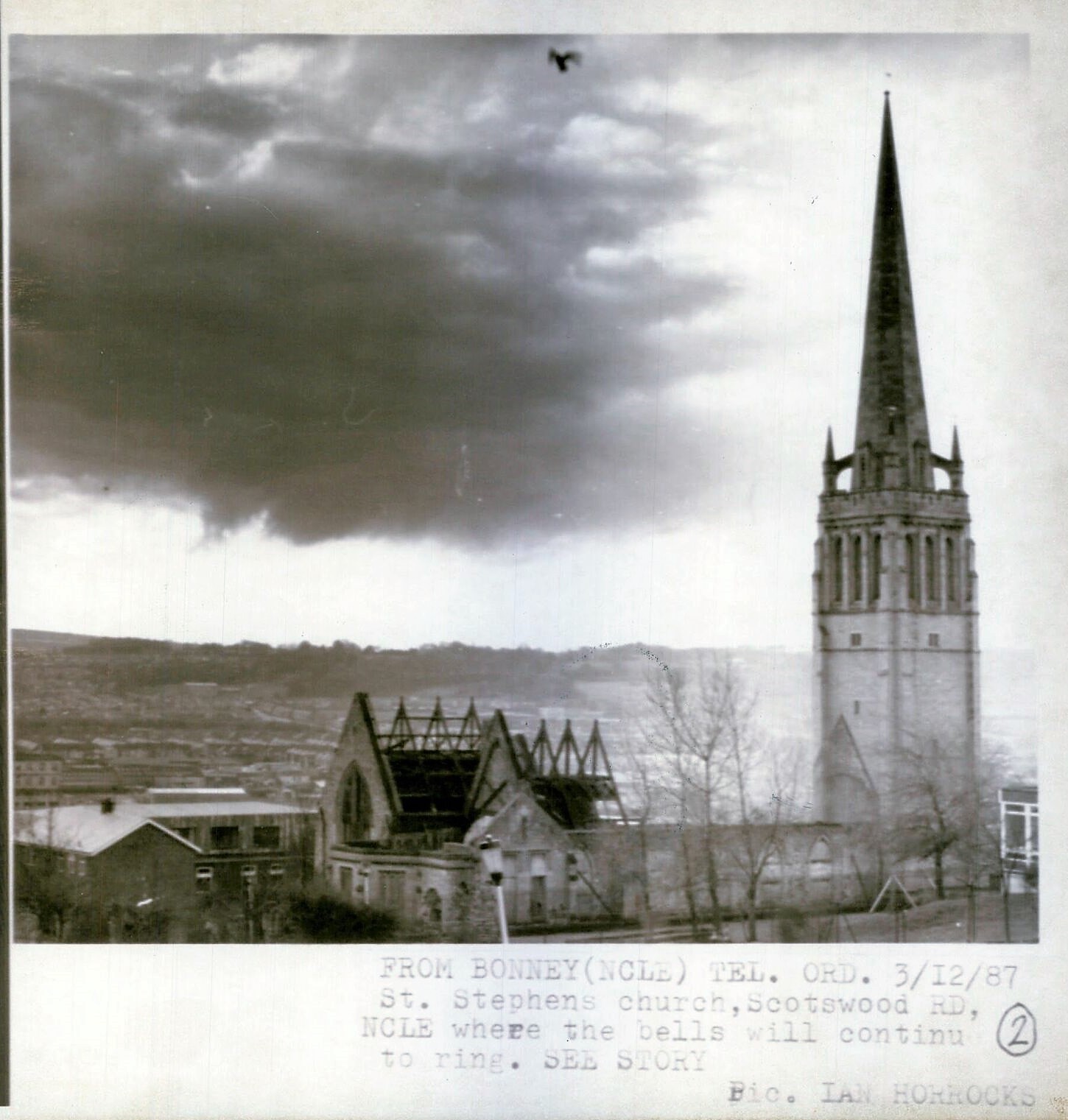
Apart from the tower, the body of the church, seen in the picture of 1910, was demolished after the church was declared redundant. It is reported that there had been lead stolen by vandals that had not been notice and that dry rot had set it. It would have cost more than £1m to put the building into order. The tower is now in the care of “The Churches Conservation Trust” and there is no public access to it.
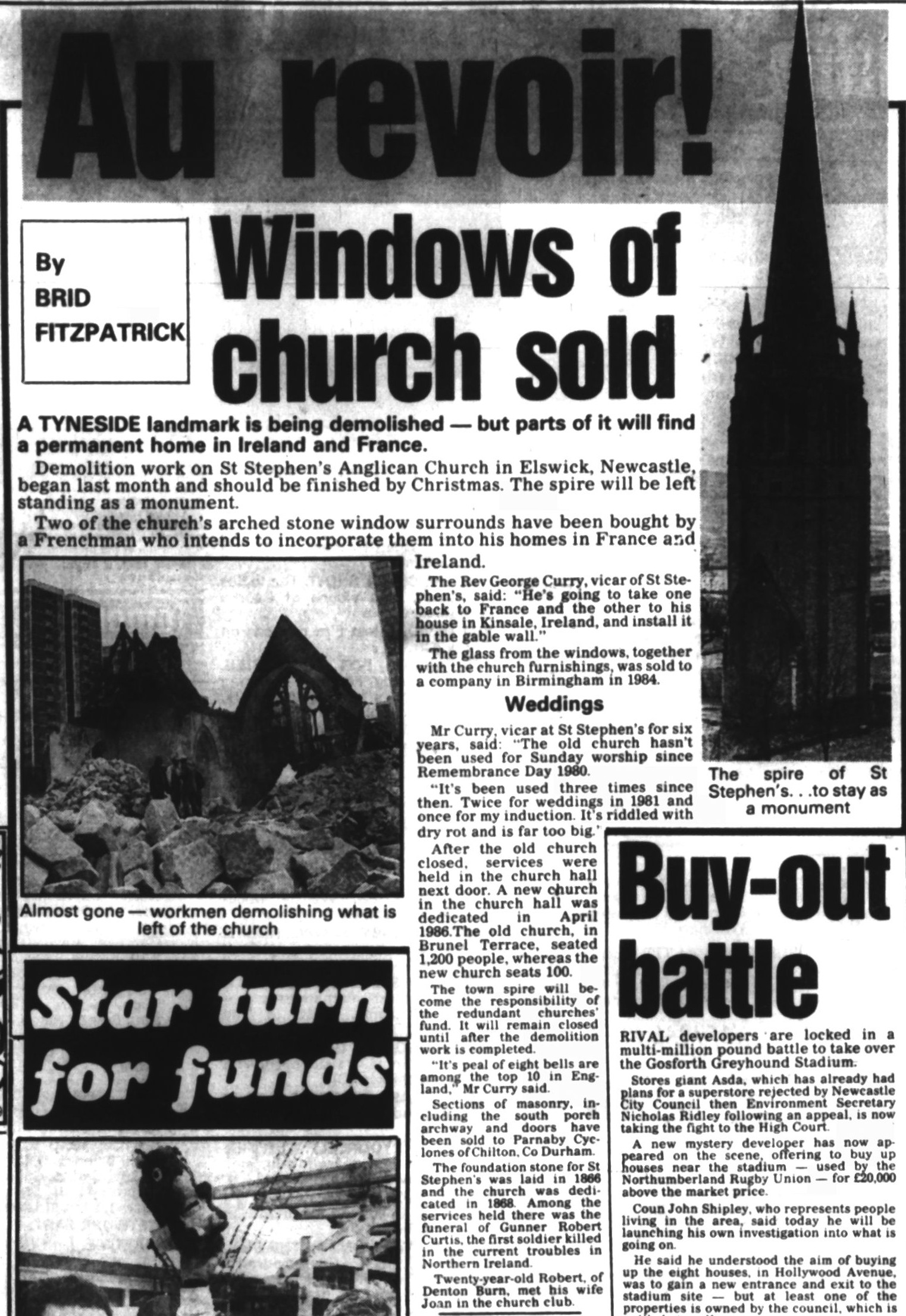
The windows were sold “.. to a Frenchman”.
 |
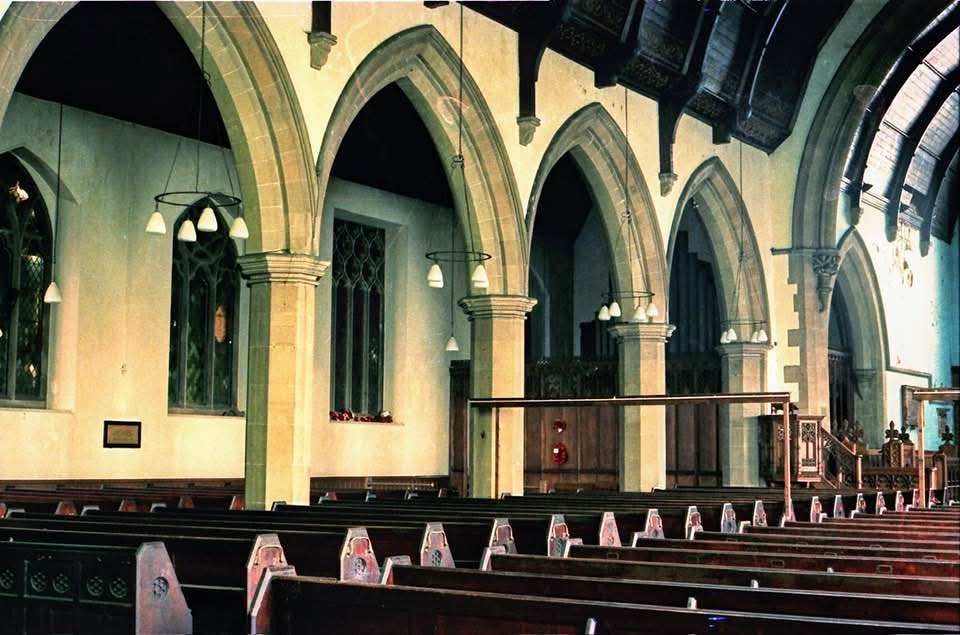 |
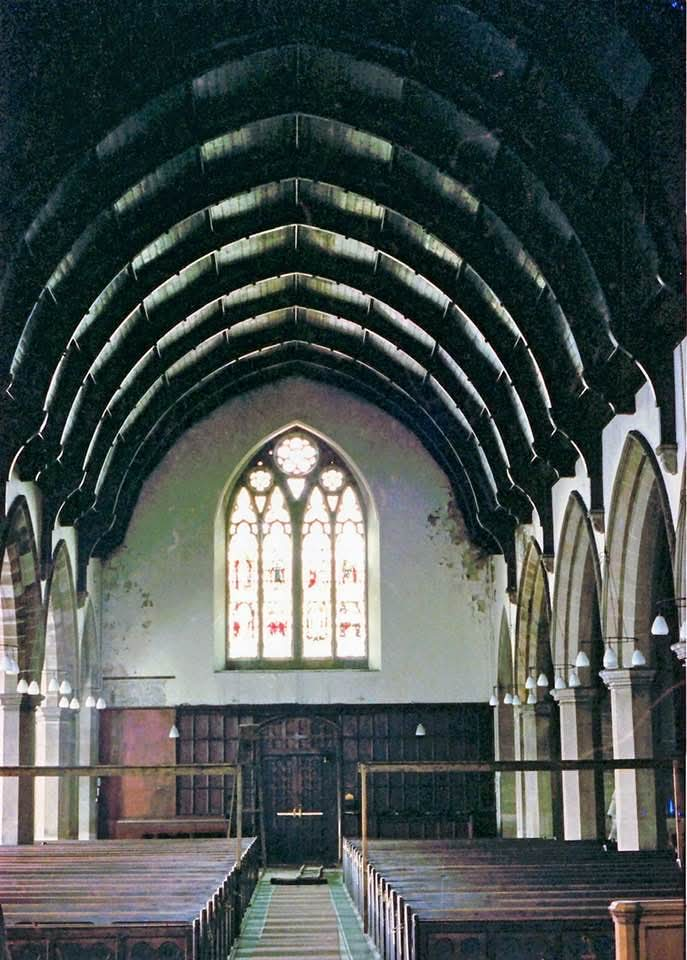 |
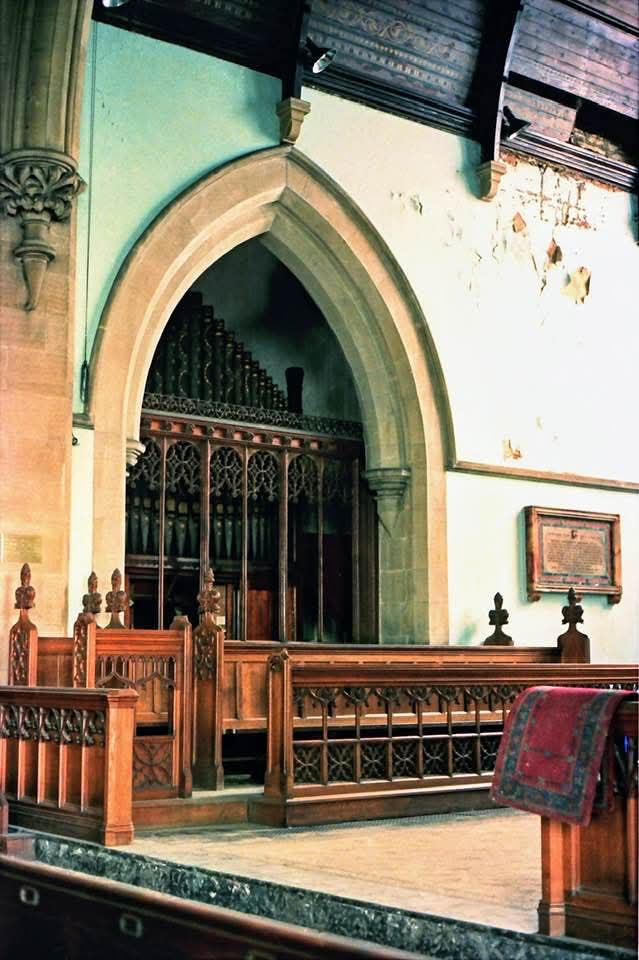 |
 |
|
| Photographs of the church in its latter years. ©Aidan W Evans | |
The congregation meet in Elswick Parish Church, dedicated to St Stephen and St Paul, which covers the area of two former churches in the area, St Stephen’s Low Elswick and St Paul’s High Elswick.

Elswick Parish Church – St Stephen’s is behind.
The Bells
These wonderful bells were cast and hung by Taylors in 1880. The tenor, as supplied, weighed 28-3-21. They were dedicated on November 17th of that year. It was reported in The Newcastle Journal of 18th November:
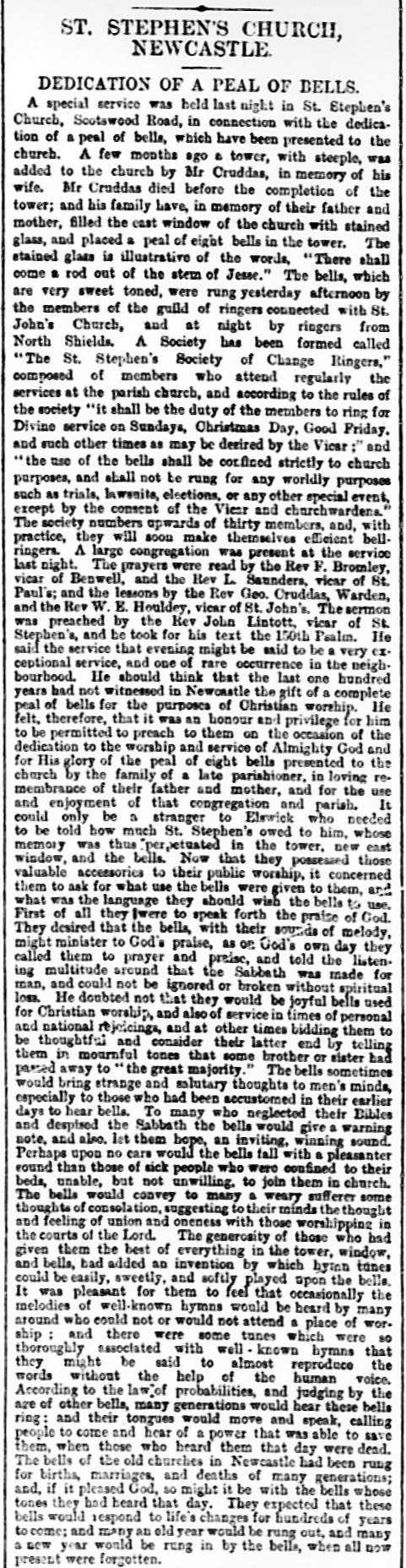
A brief note of their dedication appeared in “Church Bells” magazine in the edition of December 4th 1880:
Opening of a New Ring of Eight at St. Stephen’s, Newcastle-on-Tyne.
On Wednesday, the 17th ult., the North Shields Branch of the Durham Association opened the above for Divine Service with a touch of 810 Grandsire Triples. After the service more touches were rung. J. Rossiter, 1 ; G. Park, 2 ; J. Hern, 3 ; E. Willan, 4 ; W. Waugh, 5 ; E. Smith, 6 ; W. Reed (conductor), 7 ; S. Nott, 8. [No time mentioned.] Tenor, 30 cwt., in D.
The bells are by Taylor and Sons of Loughborough. The bells are fitted with Ellacombe’s chiming apparatus. The tenor can be raised by one man, and rises true.
A new cast-iron headstock and new wheel for tenor were supplied by Taylors in December 1897
This note about ringing here appeared in Bell News on January 2nd 1904
St. Stephen. Durham and Newcastle Association. Eight bells. All by Taylor 1880. Tenor “ 29 tons 3 cwt. 21 lbs.” {sic)., diameter 4 ft. 7 in. Timber frame. Bells go well. Rehung by Taylor, 1898. Ropes new 1893, fair. Method: Plain Bob. Sunday ringing: 10.30 to 10.45, and 6.15 to 6.30. Practice; Monday, 7.30.
it is noted in The Ringing World of August 1st 1930 that; The heavy ring of eight (tenor 30 cwt.) at St. Stephen’s Church, Elswick, Newcastle-on-Tyne, are undergoing a comprehensive scheme of rehanging by Messrs. Giillett and Johnston, of Croydon. This involved new gudgeons and ball bearings and some frame supporting metalwork
Despite this work, they needed to be rehung in a new lowside case iron frame and retuned by Taylors in 1939. They are generally considered to be among the finest rings of bells in the area. One can only hope that either the tower issues will, at some point, be resolved or that the bells are moved to a suitable tower.
In The Ringing World of October 25th 1963, in the report of the D&N AGM, it is stated that there had been repairs to the tower during the year that had made the bells ringable again.
The first peal on the bells was rung on 7th February 1885 and this is how it was reported in “Bell News and Ringers’ Record”:
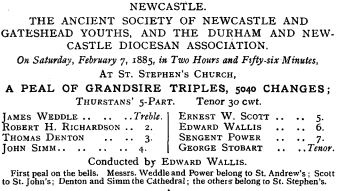
The note that two of the ringers were from St Andrew’s is interesting, in that it is generally held that these bells fell out of use when the tenor cracked when being tolled for the death of Disraeli in 1881, four years before this peal took place. It was noted in Bell News and Ringers’ Record of March 7th 1885 that several band had tried on innumerable occasions tried previously to peal the bells.
1 6-2-15 31.38″ 1880 John Taylor & Co 1130.0 Db+33c (7-0-4)
2 7-0-18 32.38″ 1880 John Taylor & Co 1063.0 C+27c (7-2-4)
3 9-0-6 35.38″ 1880 John Taylor & Co 947.0 Bb+27c (9-2-12)
4 10-2-23 38.00″ 1880 John Taylor & Co 844.0 Ab+28c (11-0-24)
5 13-3-26 42.25″ 1880 John Taylor & Co 754.0 Gb+32c (14-2-20)
6 15-0-23 44.25″ 1880 John Taylor & Co 710.0 F+28c (16-0-3)
7 22-2-4 49.25″ 1880 John Taylor & Co 633.5 Eb+31c (23-0-10)
8 27-2-8 55.00″ 1880 John Taylor & Co 564.0 Db+30c (28-3-21)
(Weights in brackets are the original 1880 weights.
; Retuned and rehung, July 1939. 6-2-15, 7-0-18, 9-0-6, 10-2-23, 13-3-26, 15-0-23, 22-2-4, 27-2-8. 31⅜”, 32⅜”, 35⅜”, 38, 42¼, 44¼, 49¼, 55” diameter. New frame and fittings, 1939
Inscriptions
- J. TAYLOR AND SONS FOUNDERS, 1880.
- J. TAYLOR AND SONS FOUNDERS, 1880.
- J. TAYLOR AND SONS FOUNDERS, 1880.
- J. TAYLOR AND SONS FOUNDERS, 1880.
- J. TAYLOR AND SONS FOUNDERS, 1880.
- J. TAYLOR AND SONS FOUNDERS, 1880.
- J. TAYLOR AND SONS FOUNDERS, 1880.
- J. TAYLOR AND SONS FOUNDERS, 1880.