Bamburgh, St Aidan 8: 13-3-0 in F MAP
 Ringing:
Practice: Tuesday 19:00 to 20:30.
Church History
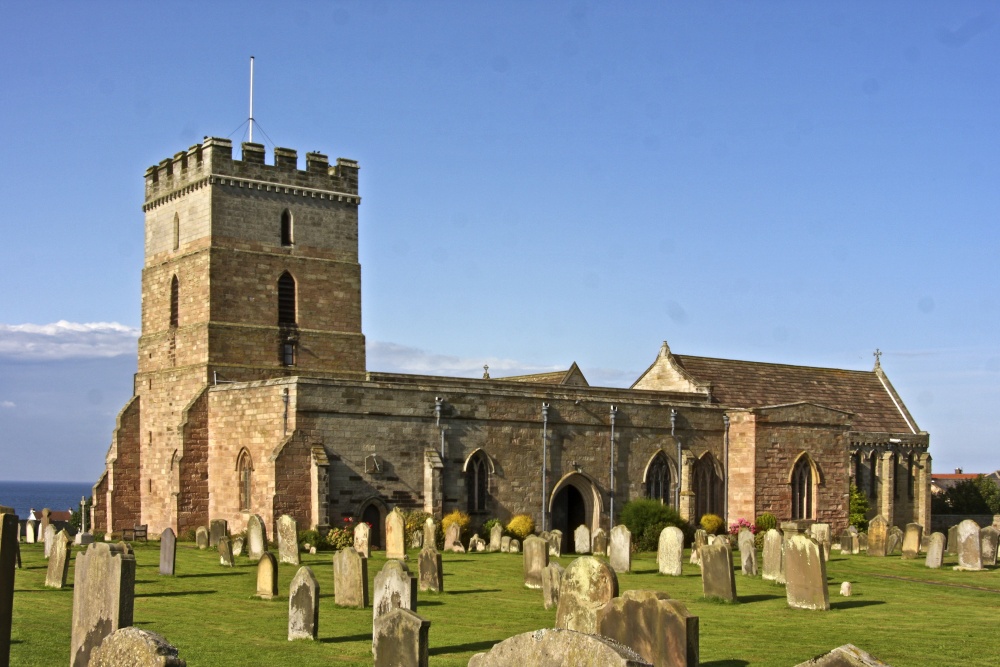
In 635, at the request of King Oswald, Aidan comes to Northumbria from Iona and causes the first church to be built, probably on the site of the present church. Tradition has it that the only relic of this first church is the beam over the font. It serves no structural function and is believed to have supported the awning under which Aidan died. Mention of this beam is made by Bede in his chronicles.
In 1121, by the grant of Henry I Bamburgh Church and Parish were attached to Nostell near Wakefield in West Yorkshire, where there was a religious establishment of the Augustinian Canons.
The greater part of the present day church was built between 1170 to 1230. Few traces of the Norman church remain but several authorities state that these are to be found in the window in the east wall of the north transept, which has a round-headed internal splay the exterior of which has been altered to a lancet.
The first extension of the Norman church was the addition of the north aisle in 1190 and the enlargement of the north transept. The arch into the north aisle was rebuilt to its present style and size, and at the same time those into the chancel and south transept were similarly altered. 1230 saw the construction of the chancel, to supersede the previous Norman chancel, when the Augustinian Canons came into full possession of their Bamburgh property. The chancel is unusually long – 60 ft. by 21 ft. – in relation to the nave. Within the chancel today are the recumbent effigy of a knight, reputed to be called Sir Lancelot du Lake, dating from 1320 or later and the helmet, breastplate, sword and gauntlets of Ferdinando Forster who was killed in Newcastle in 1701.
Both transepts were lengthened in the 14th century to provide accommodation for the new altars. The north transept was made into a chantry chapel and for many years was known as the Fowberry Porch; today it is known as St. Oswald’s chapel.
With the dissolution of the monasteries in the 16th century under Henry VIII, Bamburgh church and its lands were sold to Sir John Forster and thereafter was neglected. In 1611 it was recorded that “the steeple was only half covered with lead and the other half utterly decayed and open. The church was thatched and indecently kept and defiled with doves. The windows thereof not sufficiently glassed..”
1715 saw the first Jacobite rising. Because of the prominent part he played in it Tom Forster, being unable to inherit the family estates, went bankrupt. The Forster estates, including the church, were purchased by Lord Crewe, Bishop of Durham, whose wife, Dorothy, was Tom Forster’s aunt. This marked the start of the gradual restoration of the Church building.
In 1757 Thomas Sharpe became curate of Bamburgh. For the rest of this century the Sharpe family played a leading role in the ongoing restoration of the Church. At the west end of the north aisle is a monument given in 1839 by Catherine Sharp to be a memorial to her husband and several members of the Sharp family.
The first organ was installed in church in 1891. In July 1837 the crypt was “rediscovered”. Quite how it had come to be lost is not known. It had been used as a burial chamber both by the Augustinian canons and by the Forster family. The crypt, which is not open to the public, comprises two chambers, the larger of which has a vaulted roof and appears to have been used as a chapel, having and altar, Piscina and aumbry.
Between 1841 and 1852 the box pews were removed. An oil painting by the font shows how the interior of the church looked when the box pews were in situ. Also at this time (1852) a second organ was installed. In 1847 the windows in the chancel were glazed with glass from the Netherlands. They depict the twelve Apostles. In 1883 the present organ was installed in the chancel. Subsequently, in 1889, the organ was moved to its present position in the south transept.
In 1885 the effigy of Grace Darling was placed in the North Aisle. This was originally in the churchyard but following a storm that year when the canopy was blown down the effigy was brought into the church and another one put in its place outside.
Between 1895 and 1900 the roof of the chancel, which for many years had been flat, was restored to its original form thus enabling the lancet windows at the east end of the church to be extended to their original height. The present reredos, carved of Caen stone, was set up being the altar. The 16 carved figures are of Northumbrian and other saints with the two principal figures being Saints Aidan and Oswald respectively. The tower was also raised
In 1912 the installation of the 7th and Tenor bells completed the peal of eight bells in the tower. Prior to 1885 the church had only two bells and the casting of the new peal took place over a five year period form 1907 to 1912.
source: http://www.staidan-bamburgh.co.uk/history_heritage.html
Grace Darling’s tomb is in the churchyard. The castle at Bamburgh is wonderful and is therefore well worth a visit.
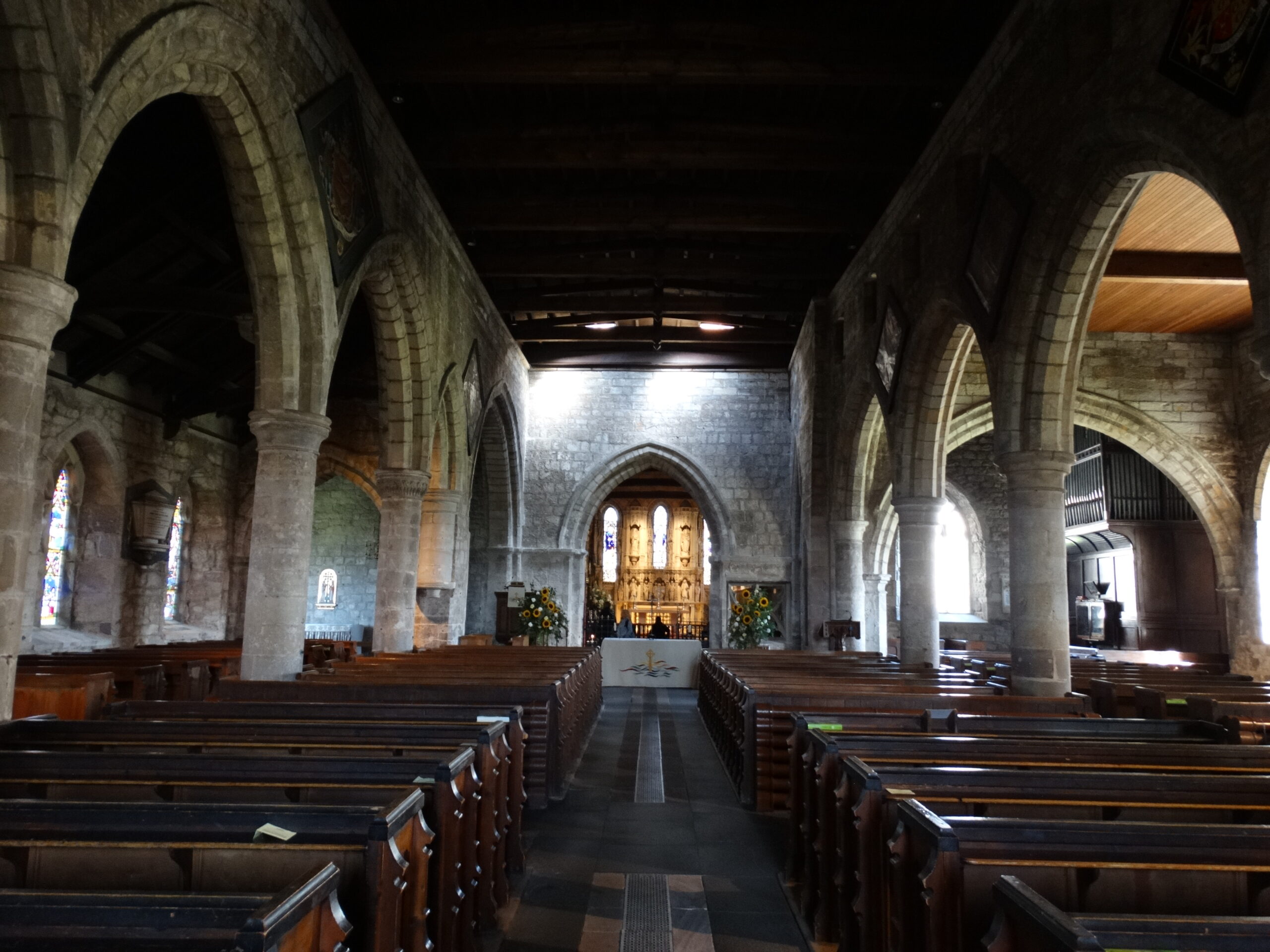
The interior of the church
There is an article about this church, with some good photographs, on the Fabulous North website
The Bells
The bells were cast over a period of six years. from 1907 when the two previous bells were recast to 1912 when the two tenors were added. The ring of 8 was dedicated in February 1913. Sadly, WWI soon started and this tower lost no less than six ringers during the war.
All the bells have Doncaster canons. They hang in a timber 8-bell frame, also by Mears & Stainbank, which is contemporary with the installation of the first four bells. They have bolted long-headed wooden trusses of Pickford type 6A and plan 8.3. None of the bells have been turned.
Some empty sockets in the walls at around the same level as the heads of the present frames probably relate to their predecessors. The ring was overhauled in 1982 by Whitechapel.
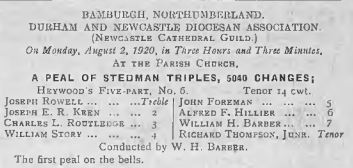
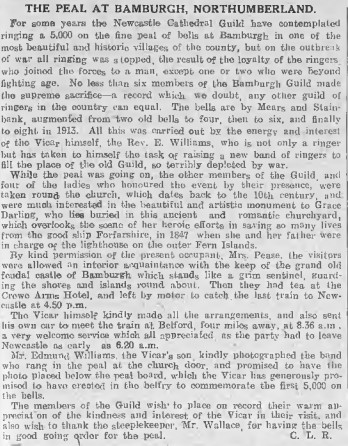
The first peal on the bells had to wait until August of 1920, as reported in The Ringing World of August 13th 1920:
1 4-3-24 27.38″ 1907 Mears & Stainbank 1469.5Hz F#-24c
2 5-0-24 28.50″ 1909 Mears & Stainbank 1407.0Hz E#+12c
3 6-0-2 30.50″ 1907 Mears & Stainbank 1234.0Hz D#-15c
4 6-2-2 32.50″ 1907 Mears & Stainbank 1106.5Hz C#-3c
5 8-0-4 35.00″ 1907 Mears & Stainbank 986.0Hz B-3c
6 8-2-10 36.50″ 1909 Mears & Stainbank 930.0Hz A#-4c
7 10-2-16 39.50″ 1912 Mears & Stainbank 829.0Hz G#-3c
8 13-3-11 43.50″ 1912 Mears & Stainbank 737.0Hz F#-7c
Inscriptions
- HOLY BLEST TRINITY
DARKNESS IS NOT DARK WITH THEE :
THOSE THOU KEEPEST EVER SEE LIST AD EVEN TIME A.D. 1907 - PRO ECCLESIA DEI (For the church of God)
THE BEQUEST OF WILLIAM ROGERSON OF BAMBURGH
BORN 29TH JULY 1826 DIED 23RD JANUARY 1909 - LORD MAY THIS BELL FOR EVE BE TUNEFUL VOICE O’R LAND AND SEA TO CALL THY PEOPLE UNTO THEE RECAST A.D. 1907
- DEO GRATIAS (Thanks be to God) A.D. 1907 (rest obliterated)
- TO THE GREATER GLORY OF GOD.
RECAST 1907
E. WILLIAMS VICAR J. BURDEN-SANDERSON CHURCH
E. J. HART WARDENS
A.H. LETHER-CULLY VESTRY CLERK - “O COME LET US WORSHIP”
TO THE GLORY OF GOD
THIS BELL WAS GIVE BY THE PARISHIONERS OF BAMBURGH A.D.1909 - TO THE GLORY OF GOD
THIS BELL WAS PRESENTED BY M.G. WATSON IN LOVING MEMORY OF HER HUSBAND J.W. WATSON OF ADDERSTONE HALL WHO DIED 30TH JANUARY 1909. RESQUIESCAT IN PACE (Rest in peace) - TOLL AND CHIME TO THE END OF TIME
FOR MAN IN HIS DAY, FOR GOD ALWAY
AD 1912. TO THE GLORY OF GOD AND IN HONOUR OF ST AIDAN.
FIRST BISHOP OF LINDISFARNE AND FOUND OF THE CHURCH OF BAMBURGH.
THIS BELL WAS GIVEN BY LOVERS OF THE PLACE WHERE HE LABOURED AND ENTERED INTO REST
G. WILLIAMS M.A. VICAR AND JOHN C. HUTCHINSON, CHURCH WARDEN
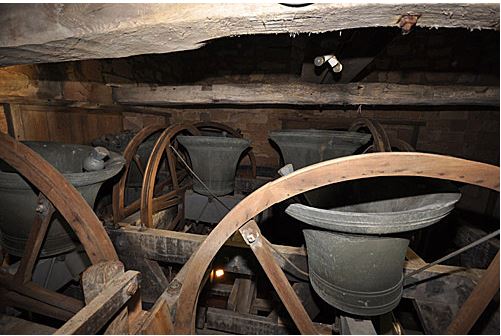
The Bells – source: Church Website
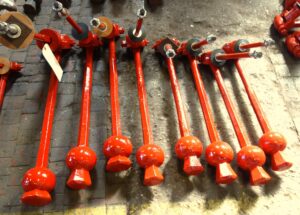
The clappers and crownstaples were restored by Taylors in March 2022
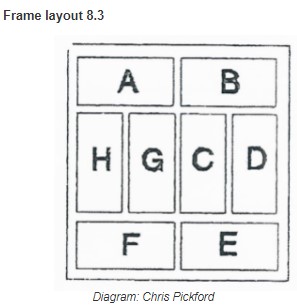
The frame layout