Durham, St Oswald, 8: 12-3-6 in F# MAP
 Ringing:
Sunday 10:30 to 11:00;
Practice Practice Monday 19:30 to 21:15.
Church History
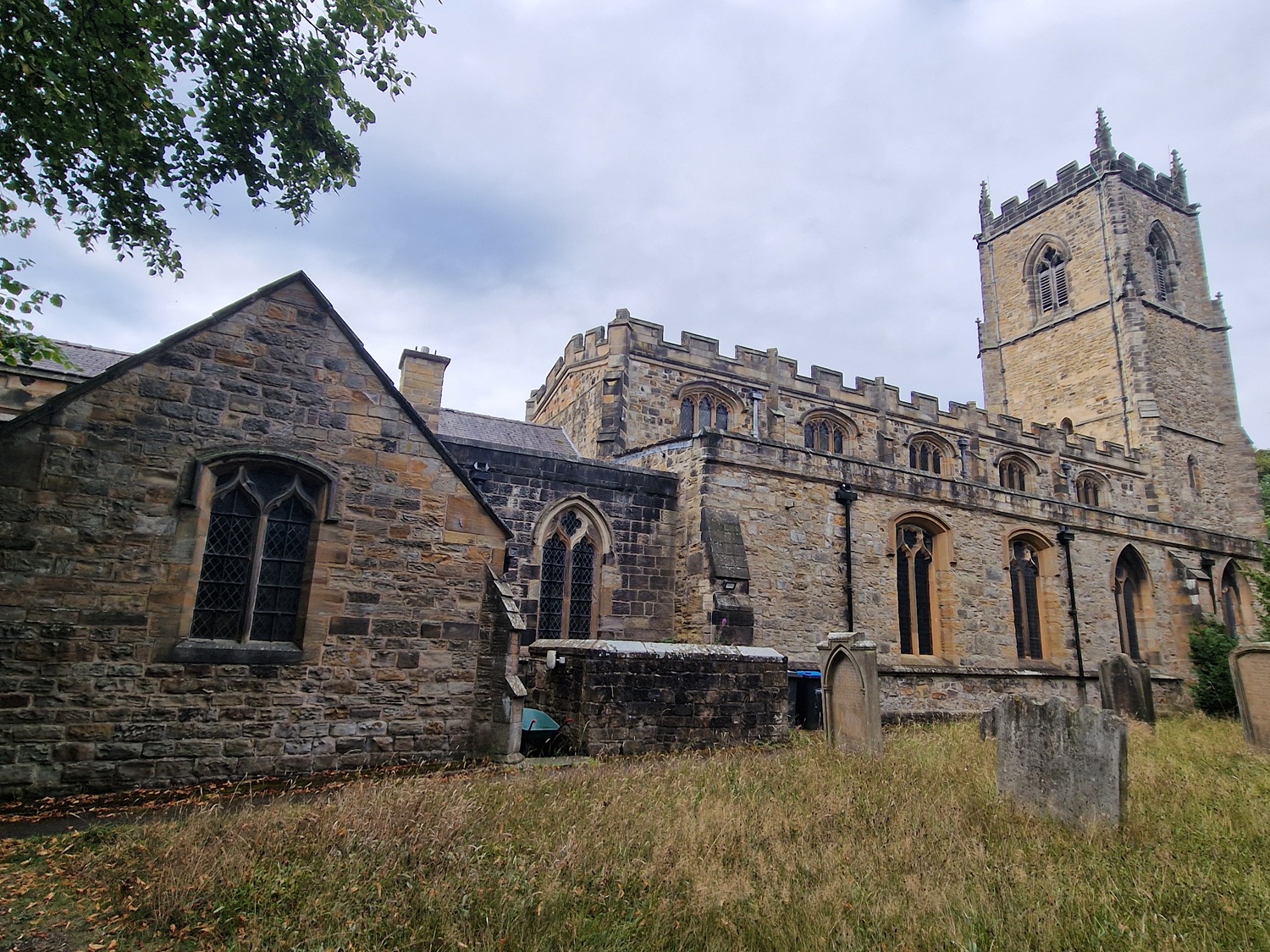
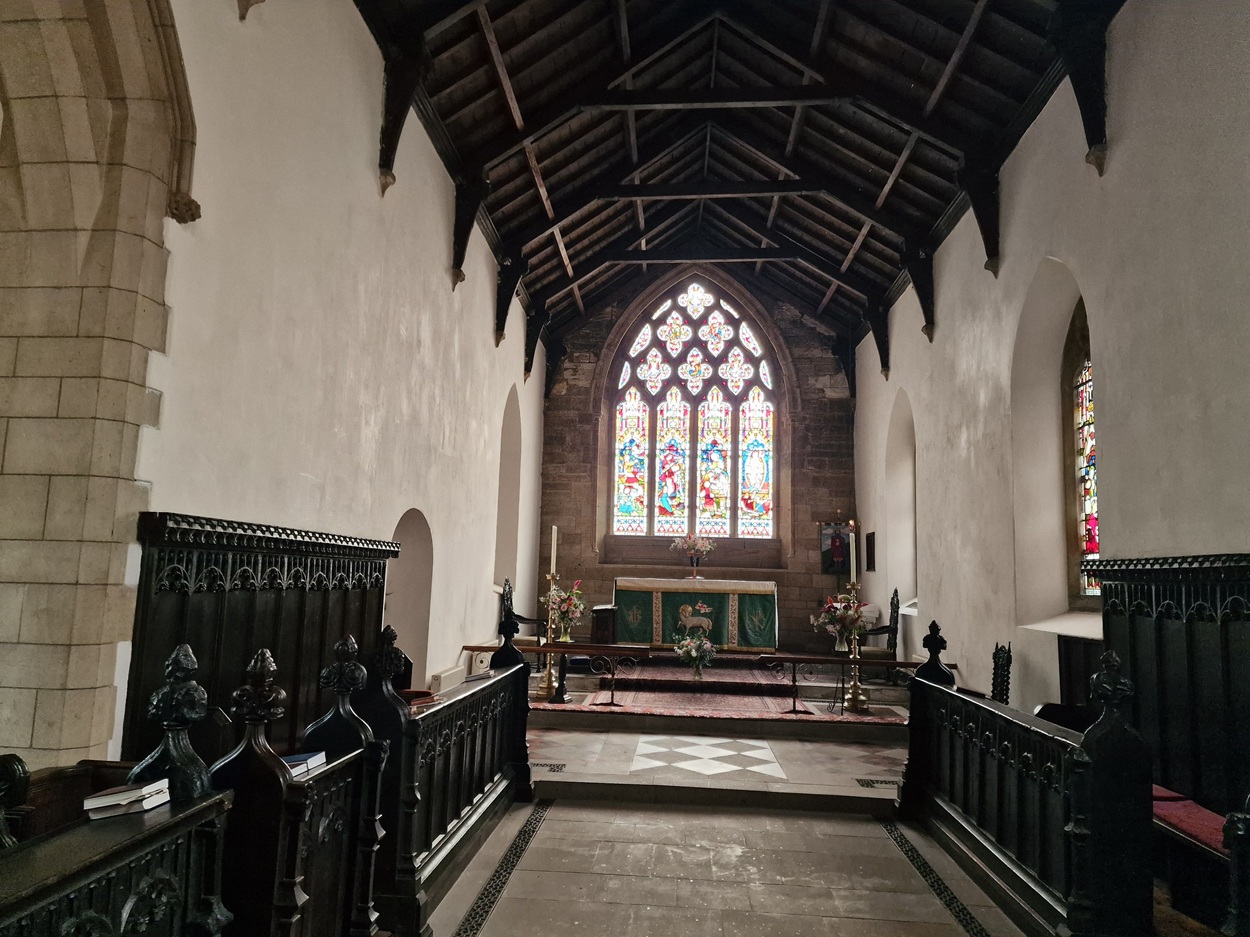
The present church dates from the late 12th century. It is likely built on the site of an earlier church. It was rebuilt in 1834 by Ignatius Bonomi. In 1864, Hodgson Fowler rebuilt the tower and the chancel, and added an organ chamber.
The church has stained glass windows. The west window dates from 1864 to 1866 and was designed by Morris & Co with some panels by Ford Madox Brown. Other windows were designed by Kempe and Co., and by Clayton and Bell.
On 6 May 1952, the church was designated a Grade II* listed building.
In 1984, the organ and part of the chancel were destroyed by fire. A new organ was built by Peter Collins to the specifications of the organist David Higgins, and installed in a new gallery at the west end of the church. The organ was restored in 2019.
Source: https://en.wikipedia.org/wiki/St_Oswald%27s_Church,_Durham
An article on the church, with some good photographs, is on the Fabulous North website
The Bells
There were 3 bells here in the 1553 survey. The current bells replace a ring of 6 what were cast by Christopher Hodson in 1694, in the precincts of the Cathedral. Archaeologists found pieces of cope that fitted the rim of the 3rd bell here in 1978.
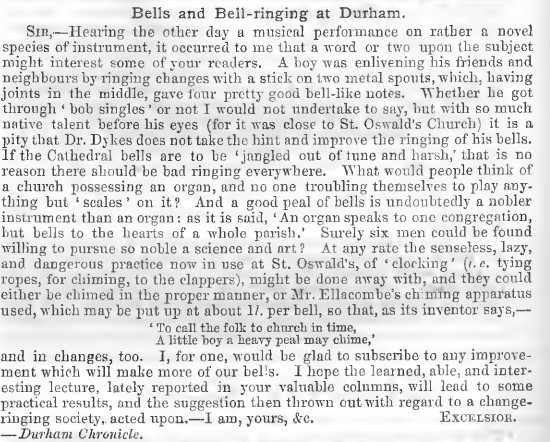
A rather cutting letter about ringing here appeared in “Church Bells” magazine in the edition of April 20th 1872:
The “Bell News and Ringers Record” reported in their edition of November 25th 1882:
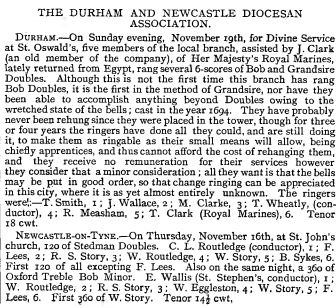
The same paper later reported, in their edition of August 11 1883:
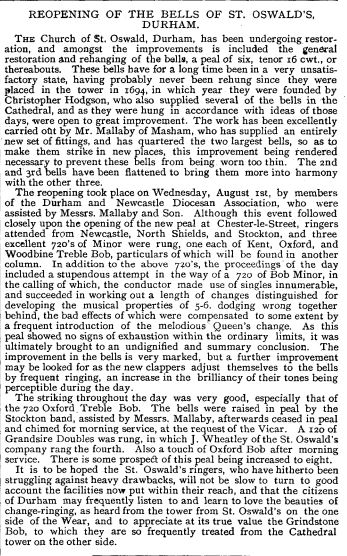
The bells were rehung by Mallaby of Masham in 1883. The second was recast by Gillett & Co in 1885. The new bell was cast on 16th March 1885 and weighed 5-3-7, replacing a bell weighing 5-3-0.
The second bell cracked soon afterwards and was recast and the ring tuned (despite 2 of them being only recently tuned) by Gillett & Co, this being reported in Bell News in their edition of April 18th 1885:
ST. OSWALD’S, DURHAM.
The second bell of this peal of six, which was cracked a few weeks ago, has been replaced by a new one, which is so like her ancient companions, that even an experienced ear would have had some difficulty in detecting which it was on the first day it w as rung in peal. The old bells have been tuned so as to thoroughly harmonise the peal, the melody of which is now very pleasing, and quite different to what it has ever been before. On Friday, March 27th, the St. Oswald’s company, assisted by Mr. Clarkson of Stockton, met at the tower and rang some 6-scores of Doubles with the tenor behind in order to test the effect of the new bell and the tuning.
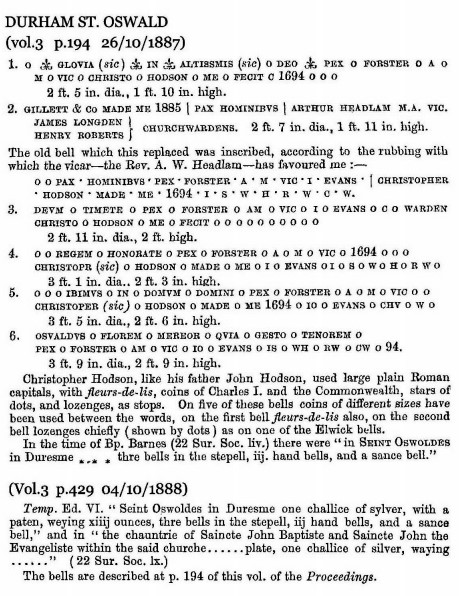
The Society of Antiquaries of Newcastle reported on the bells in 1887/8:
A report in The Ringing World of April 23rd 1926 reported ringing at an Association meeting “on the rehung six of St Oswald’s”. I have not been able to locate an article about what exactly was done at this time.
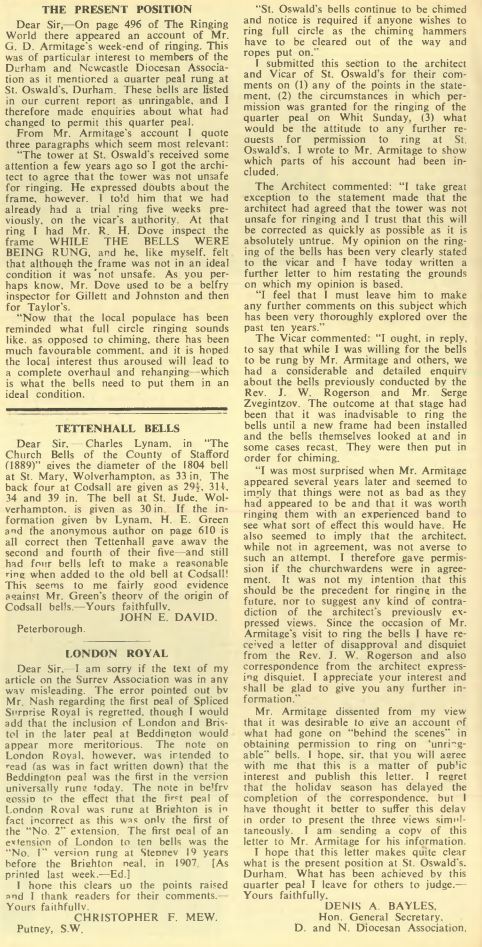
It appears that the bells ceased to be ring some time a while after WWII, perhaps around 1960, give or take – I am not sure when. There was a quarter peal reported in May of 1970. The pages of Geoff Armitage’s letter reporting this got mixed up! He appeared to say that the bells would be melted down and become a c.5cwt ring of 8, but was actually referring to Lightcliffe! However, it did elicit a response from the editor – and a rebuke for writing on both sides of the paper and not numbering the pages! “The bells of St. Oswald’s, Durham, are not to be melted down, five of them being by Christopher Hodson, 1694 (the 2nd is a recast by Gillett and Co., 1881). It is at St. Oswald’s that it is hoped to arouse local interest to have the bells hung on a metal frame lower in the. tower.
This annoyed the D&N! This reply appeared in the edition of October 9th 1970:
Naturally, there was a reply!
S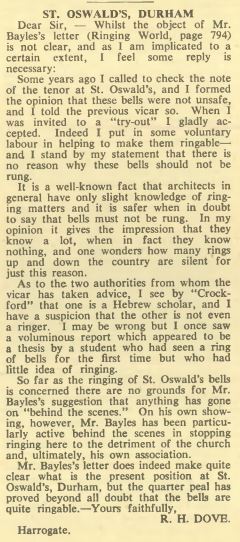
(Denis Bayles then pointed out that both were ringers and Rev. J. W. Rogerson had also been a curate here. There were also letters from the architect supporting his position and then Ron Dove supporting his – you can read these online in the RW of 1970, should you wish to!)
Taylors of Loughborough replaced the whole installation with a new ring of 8 bells in 1977, faculty granted 29th January 1976, and they are a fine ring. The listed old third and fifth bells are retained in the church.
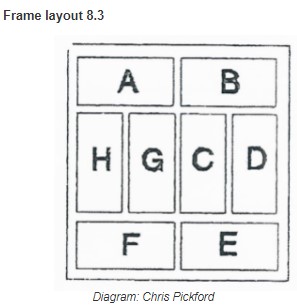
The old bellframe was left in situ, above the new one. A Diocesan Survey, by Peter Ryder, undated, but certainly post-1995, states “The Bellframes that still survive in the belfry are probably coeval with the 1694 bells. These are long-headed frames of pegged oak construction, with straight-sided braces and sloping jack braces, but no centre posts. These would be classed as type 6B, and frame layout 6.8.”
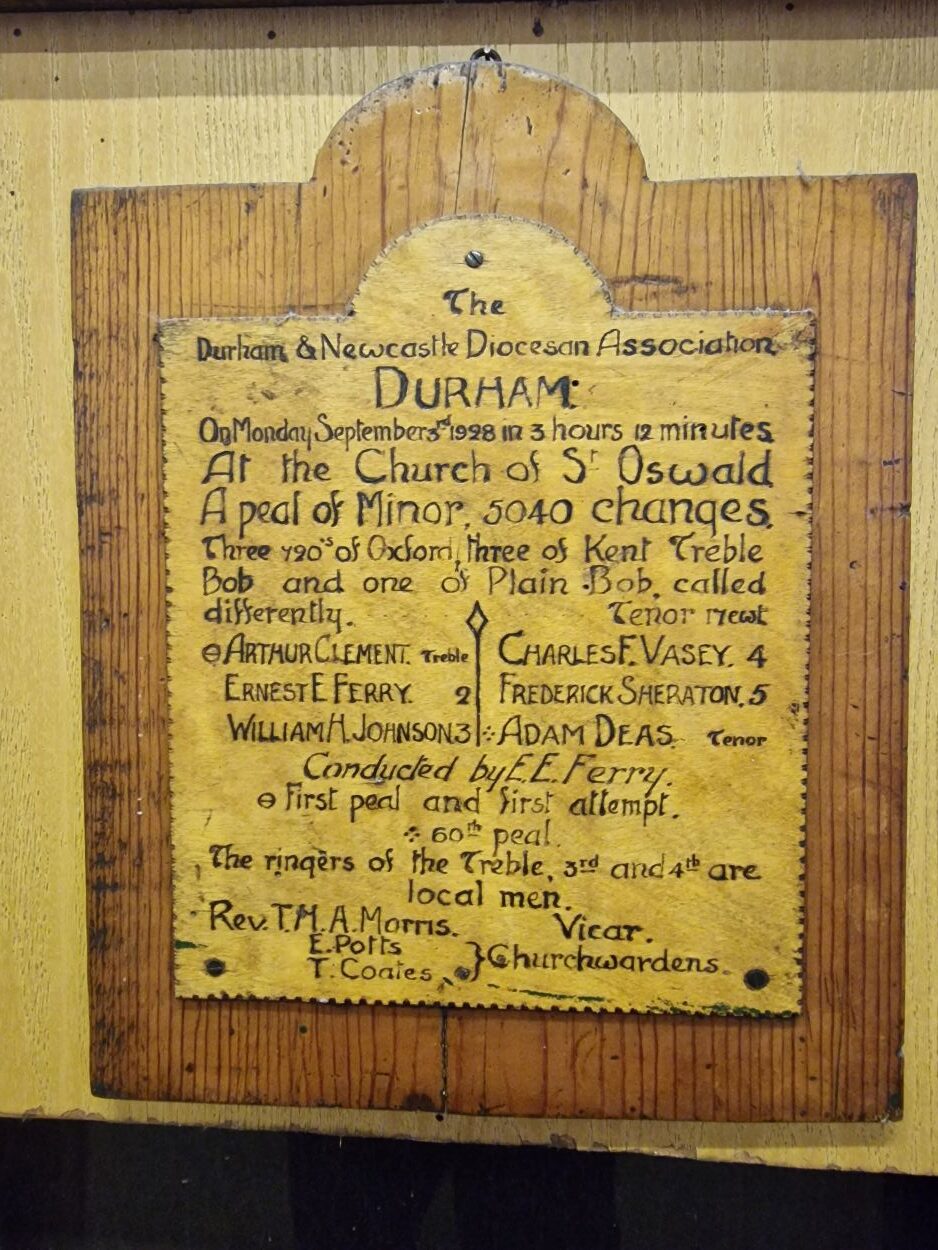
The first peal on the bells was rung in 1927 and this is its reported in The Ringing World:
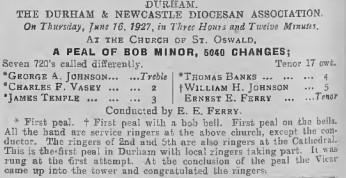
The first peal on the 8 was not rung for a while after the installation of the bells. An attempt was eventually agreed in 1984, but the fire mentioned about happened few days before it was due to be rung. The first peal was finally rung in 1987 – and I was in it!
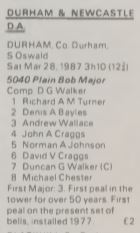
Someone from the church unlocked the tower door and let a mother and her young daughter up the tower to watch what we were doing. Part way through the peal the daughter appeared at the open door, followed a short, but agonising, amount of time later by her mother. Fortunately, the child did not step into the ringing room and they both soon departed.
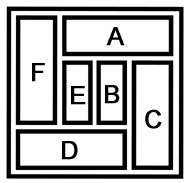
The layout of the wooden frame
The layout of the cast iron frame.
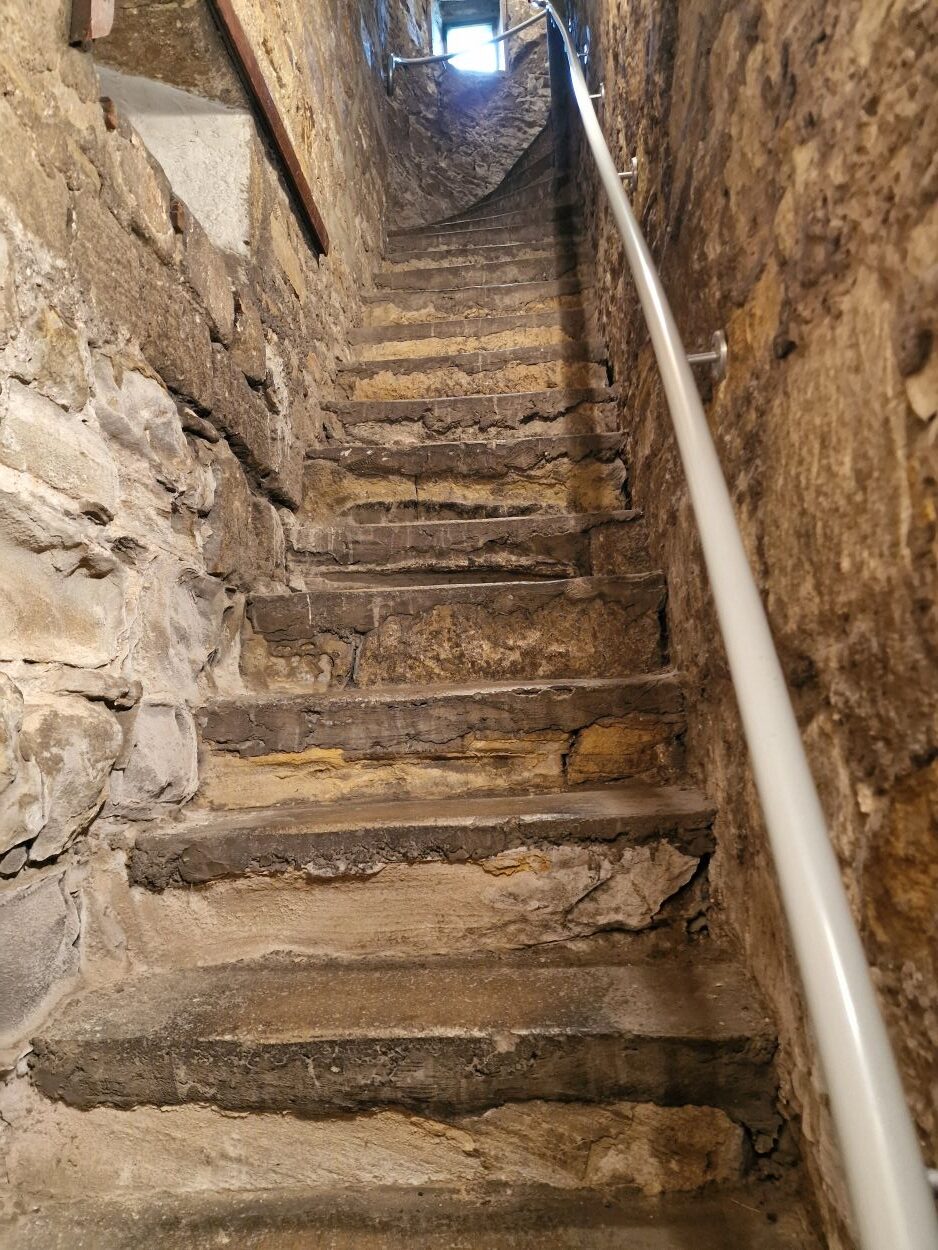
The stairs to the ringing chamber are located in the base of the tower and entry to the church is via the North Door.
1 3-1-11 24.50″ 1976 John Taylor & Co 1500.0Hz F#+23c
2 3-2-10 25.50″ 1977 John Taylor & Co 1412.0Hz E#+19c
3 4-0-13 27.00″ 1977 John Taylor & Co 1257.5Hz D#+18c
4 4-3-15 28.88″ 1977 John Taylor & Co 1118.0Hz C#+14c
5 5-2-20 30.88″ 1977 John Taylor & Co 994.0Hz B+11c
6 6-3-5 32.75″ 1977 John Taylor & Co 938.0Hz A#+11c
7 8-3-6 36.25″ 1977 John Taylor & Co 834.0Hz G#+7c
8 12-3-6 41.00″ 1976 John Taylor & Co 741.0Hz F#+2c
Unused 7-0-26 34.00″ 1694 Christopher Hodson 950.5Hz Bb+33c
Unused 11-3-15 40.50″ 1694 Christopher Hodson 802.0Hz G+39c
Inscriptions
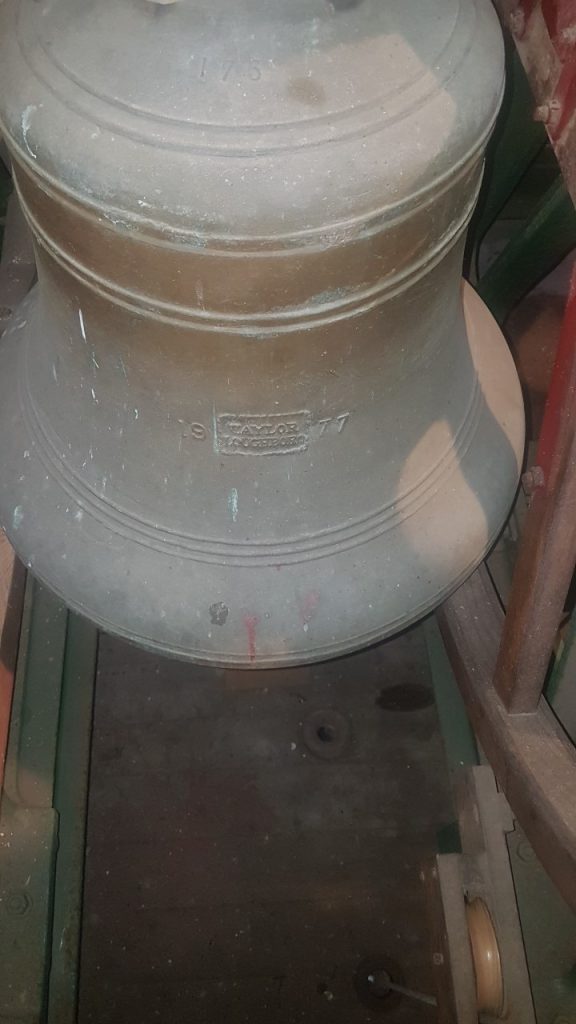
The bells are only inscribed with the date of founding and the Taylors Square Trade Mark
The Previous Ring of 6
1 4-2-21 29.00″ 1694 Christopher Hodson
2 5-2-7 30.50″ 1885 Gillett & Co, London
3 7-0-26 34.00″ 1694 Christopher Hodson 950.5Hz Bb+33c
4 8-2-4 37.00″ 1694 Christopher Hodson
5 11-3-15 40.50″ 1694 Christopher Hodson 802.0Hz G+39c
6 14-3-16 44.25″ 1694 Christopher Hodson
Photographs
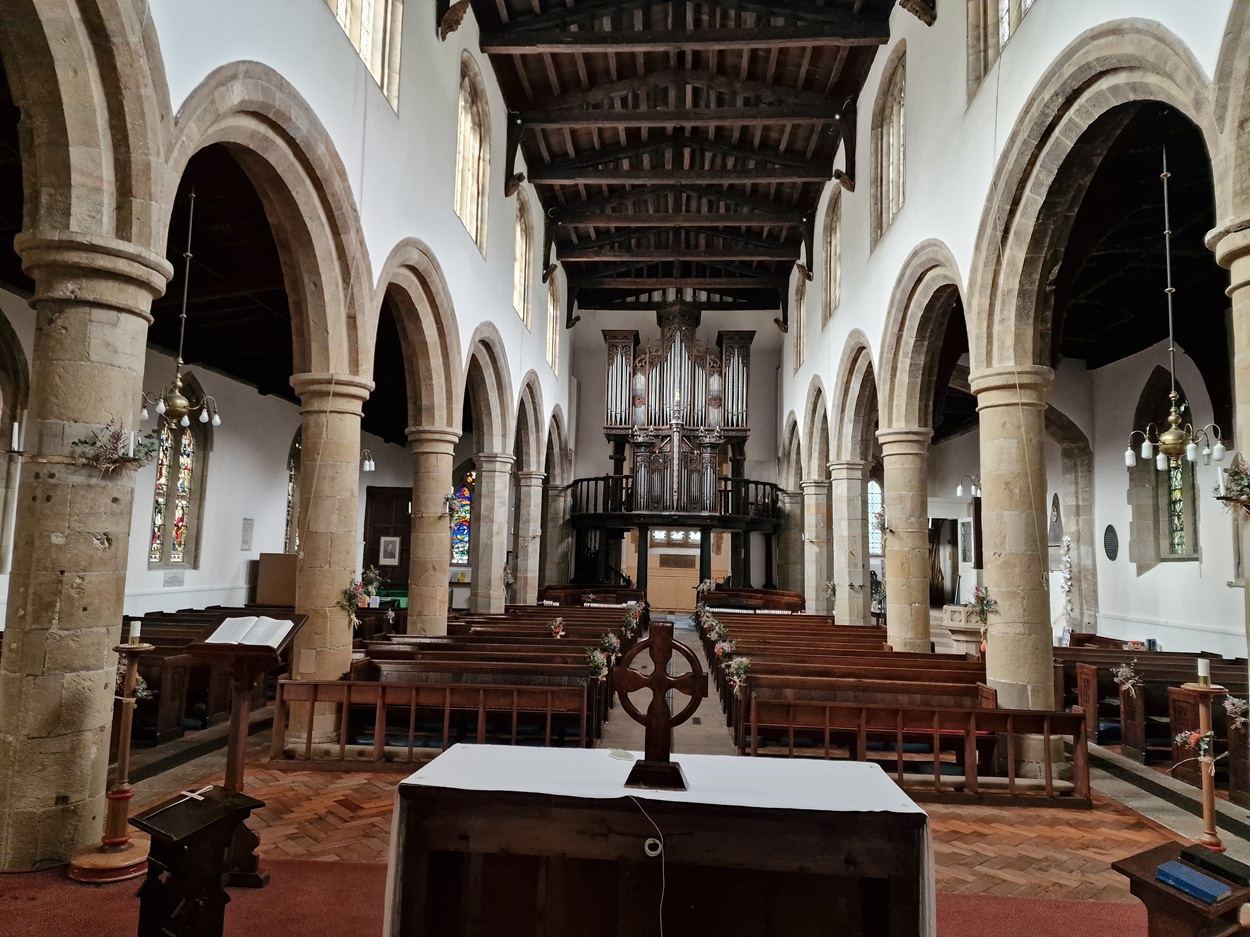 |
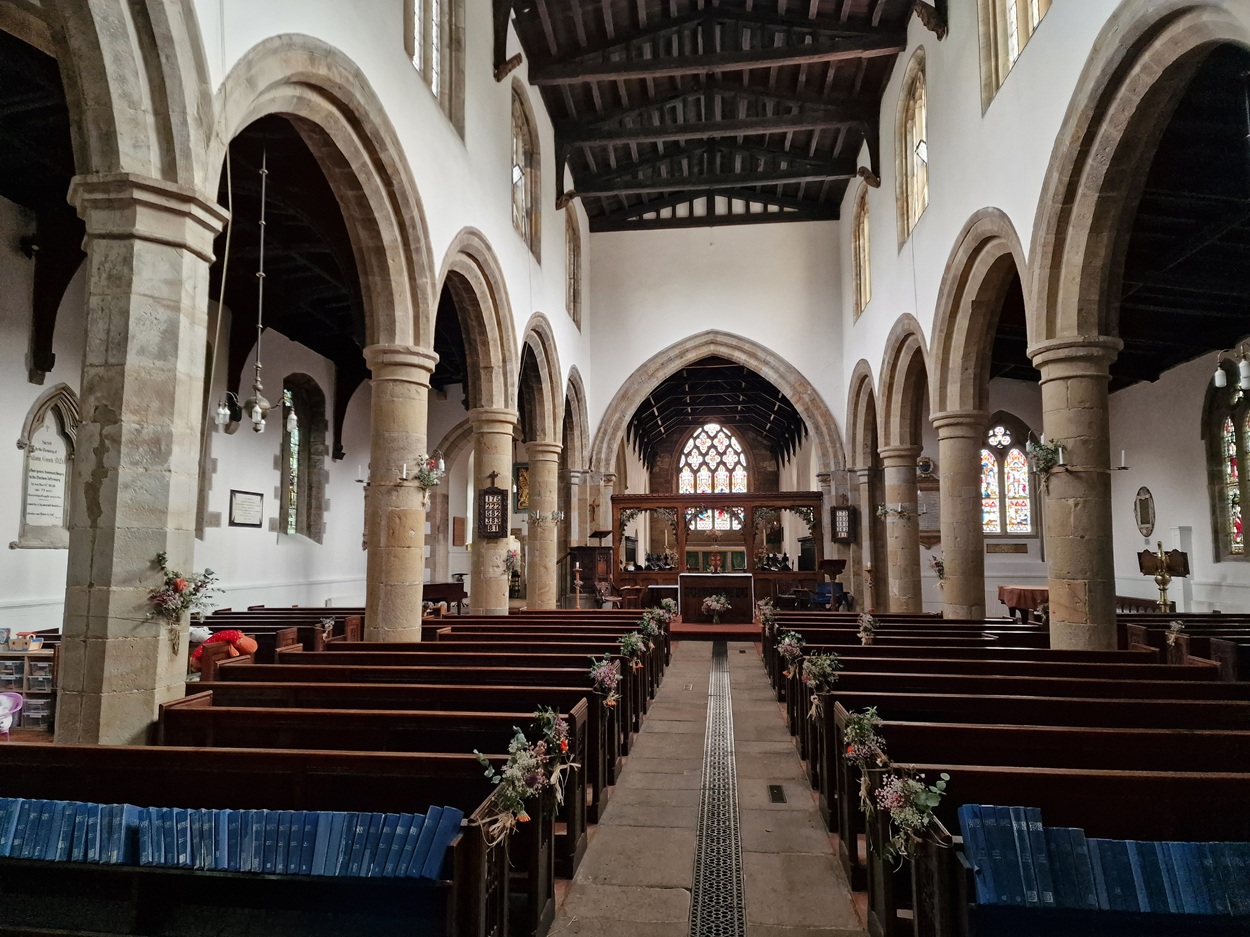 |
| The Church, Looking West | The Church, Looking East |
 |
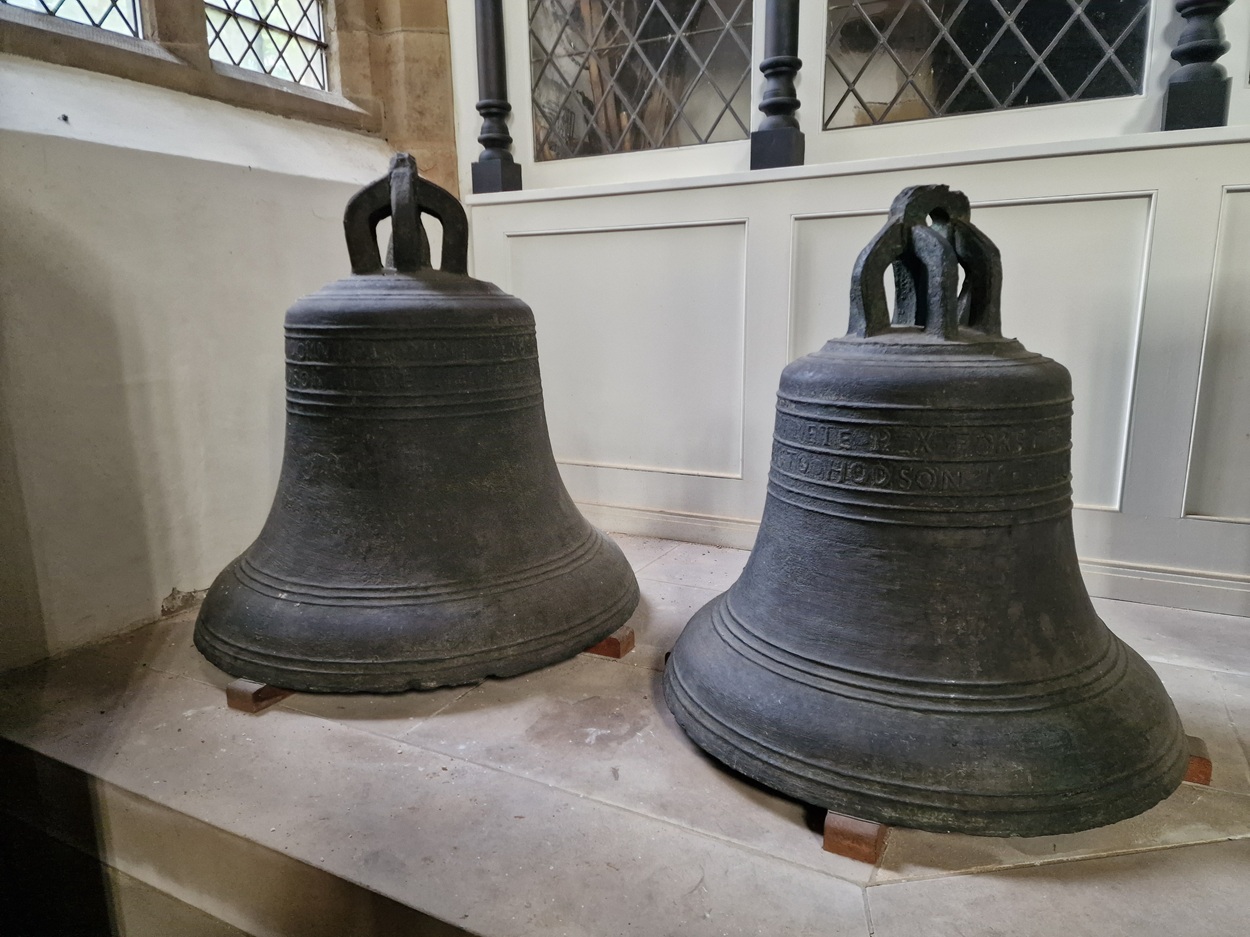 |
| The Chancel Area | The Preserved Bells From the Old Ring |
 |
 |
| The Unusual Stairs to the Ringing Chamber (Look up at the bottom when you go there to see some reused ancient carved stones) |
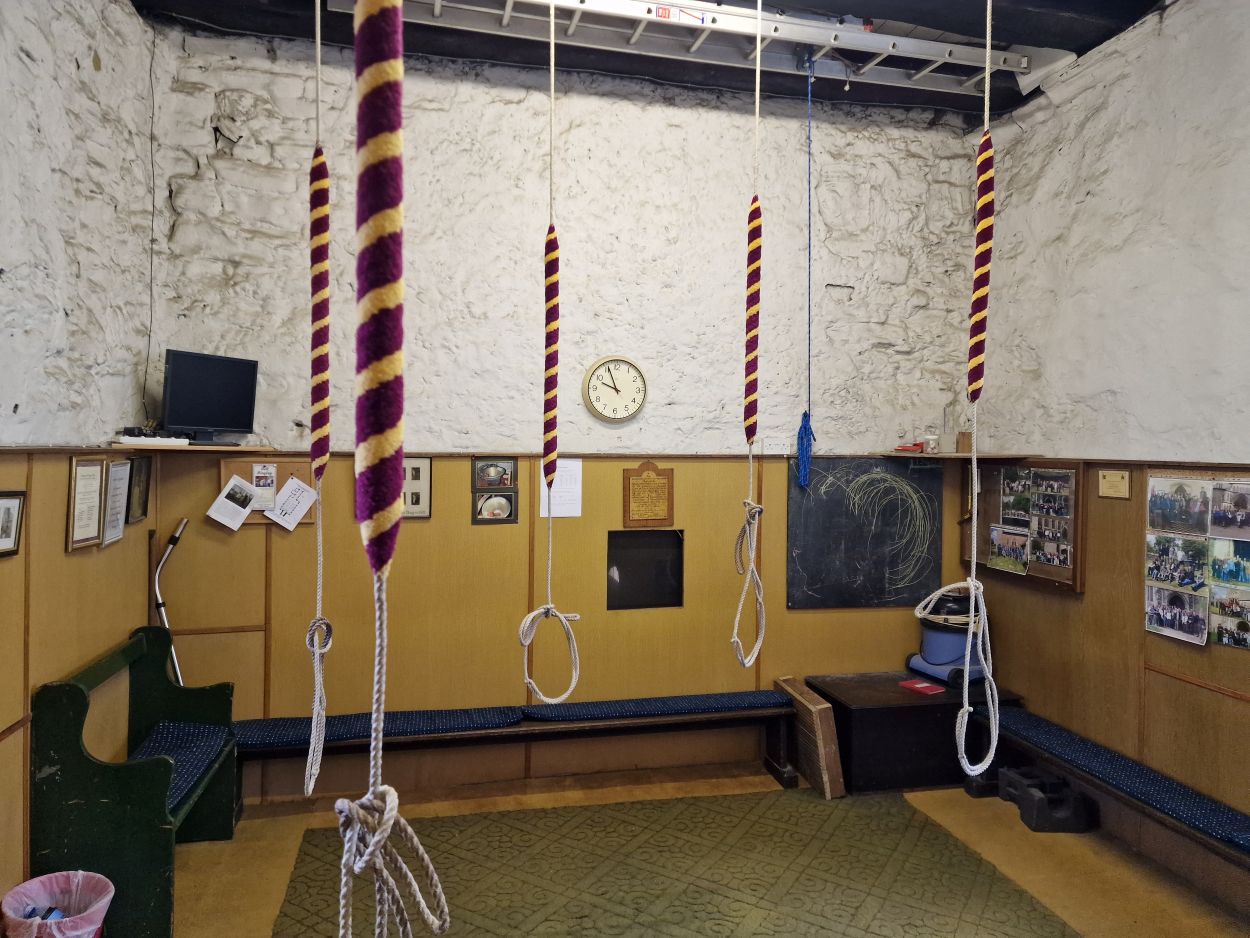
The Ringing Chamber |
 |
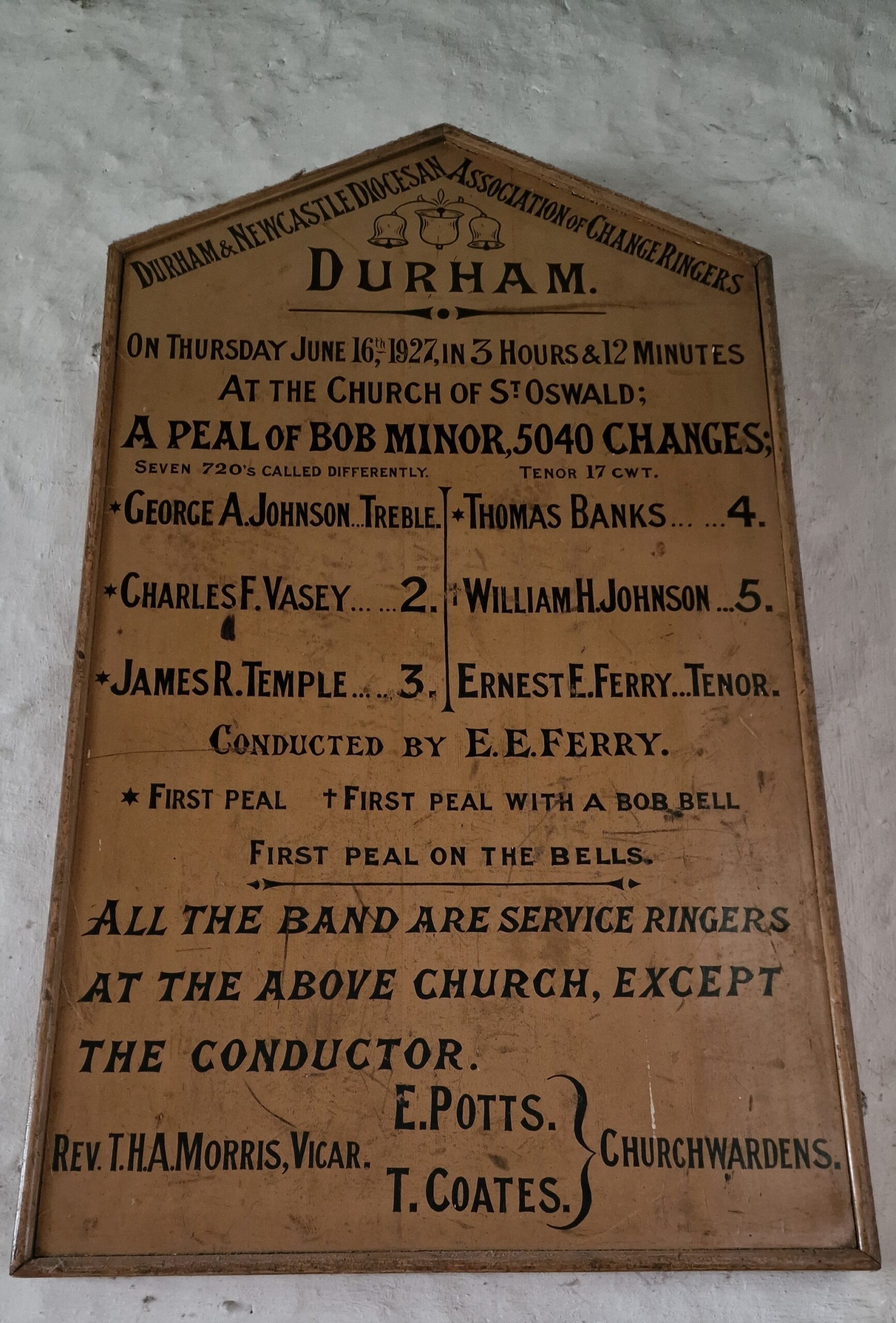 |
| The Pealboard for the First Peal on the Ring of 6 | The Pealboard for the Second Peal on the Ring of 6 |
 |
|
| One of the bells, showing the Taylor Trademark |